Comcast HD DVR Review | PVRblog From Matt: “The wonder of HD wasn’t driven home to me until I saw a TV show I’d been watching for the past year or so in standard definition. It also helped that I looked at standard def content on my low-end plasma TV for a year before getting HD. After everything was set up and I recorded a few familiar HD shows, I got to see what all the fuss is about. HD programs look pretty incredible, especially those with lots of outdoor shots. I was seeing detail I’d never seen before. After having HDTV for a couple months, I’ve realized that when there’s nothing recorded and I start channel surfing, I keep it limited to just the dozen or so HD channels.”
JupiterMedia Publishes Third Quarter Results
Stock Photo Talk | Special Interest Blog: JupiterMedia Reports Q III/2005 Results; Comparison To Annual Numbers Of Getty Images And Corbis Andy Goetze uses JupiterMedia’s financial report to compare their stock photography unit, JupiterImages with Getty Images and Corbis.
HD Camcorders Turn Prosumer
The F-Stop Blues: Save Your Memories in Hi Def with Sony’s HD Handycam This looks like one sexy camcorder.
Give me a home where my MP3’s roam
by Davis Freeberg

Buffalo HD-HTGL/R5 TeraStation
About four years ago, I made a conscience decision to digitize my life. At first it was extremely difficult to let go of my CD & VHS collection, but after experiencing the benefits of digitization, I could never go back. Digitization has been great to me. Whether it’s the ability to automatically record only the new episodes of The Family Guy or my being able to narrow down my music collection to records only produced in 1941, digitization has made exploring media fun and exciting again. This evolution has not come without a few bumps along the road. Ever since I bought my first 40 hour TiVo box, I’ve experienced storage anxiety in one form or another. Whether it was Jimmy Kimmel live being automatically deleted from my TiVo or yet another Maxtor External drive failing on me, I found that the more media I collected the bigger this problem seemed to be.
Initially I thought that I could buy external drives as my media needs grew, but I quickly learned that the problem with being an early adopter is that you don’t always know where the technology is going to head. When I finally ran out of ports on my USB hub, I knew that I had to come up with a better solution. In order to address my storage needs, I turned to the Buffalo HD-HTGL/R5 TeraStation.
The Buffalo TeraStation comes in three sizes, they have a 600 GB server, a 1 TB server and a 1.6 TB server. I decided to go with the 1 TB server for $999.99. Of course depending upon how you set up your server, you may not actually get to use the full terabyte. The server allows you to choose between Raid Spanning (no backup for your data), Raid Parity (25% backup of your data) or Raid Mirroring (100% backup of your data.) The more backup you choose, the less storage capacity you will receive. Because of the numerous drive failures I’ve seen, in retrospect, I think that I would have been better served by going with the 1.6 TB drive.
My initial impressions of the server was very positive. At the 2005 CES, the TeraStation won CNET’s Next Big Thing award. The irony of winning this award is that the server itself is remarkably small. It’s measurements are only 6.6″ x 8.7″ x 9.5″. This seems pretty impressive considering that it has the capability of storing 500 hours of television. The server comes with four USB ports and an ethernet connection for networking the server with the rest of your home. As I hooked up the server to my system, I couldn’t help but be impressed by how quiet the fans operated inside the unit. It was almost as if you didn’t even know that it was running. Once I finally had the unit hooked up to my system however, I soon discovered it’s fatal flaw.
Moving data on and off of the system was extremely slow. It took approximately one hour for each GB of data that I wanted to transfer onto my new server. If you included the countless I/O device errors that seem to plague the external drives, it took me nearly three weeks of continuous data transfer to move a little over 600 GBs onto the server. At first I thought that this was due to limitations from my computer, but after speaking with Buffalo Tech support, I was reluctantly told that this is a known issue and there is no solution available in the near future. When I asked if the server would work with a Media Center PC, I was told that it could not handle the speed at which the video files were written to the system. While I never verified that this was the case, it did seem strange to me that they would tell me that it wouldn’t work with a Media Center considering that they claim that the TeraStation is compatible with their own Buffalo HD Wireless Media player.
After searching through the internet, I was able to find an underground TeraStation site that focused on hacking into the machine, but in the end, I had no interest in voiding my warranty and I simply could not handle how slow the transfer speeds were. Had technical support stepped up to the plate and offered a timeline for when/if data transmission speeds would be improved or had they offered a work around, I probably would have kept the box, but the only encouragement that I received was to check the website in a couple of months and they might have a new driver.
While I see a huge market developing for personal media servers, without some serious improvements, Buffalo may soon find themselves facing extinction. Undoubtedly, this is one of the more attractive machines from a product design viewpoint, but with this critical flaw I would encourage anyone considering the product to think long and hard about how they need to access and write data before making a purchase.
*Update – Brian Verenkoff From Buffalo Tech responded to this article with an email disputing what I was told by their tech support. According to Brian, he felt that the speed and performance should be better then what I experienced. ZDNet also has a review on the product and they were able to acheive data speeds between 3.3 Mbps to 8 Mbps. He also made it clear that the TeraStation is “absolutely compatible with Windows MCE.”
“Our internal reports, as well as other editor’s findings rate the
TeraStation at about 7-8 MegaBYTES per second in 10/100 mode and about
11-12 MegaBYTES per second in Gigabit mode. Thus, in 10/100 mode it
shouldn’t take more than 10 minutes to move 1 GB worth of data.”
In the email he goes on to explain that these connection issues are not unique to Buffalo Technology and provides some good background information as to the limitation of NAS devices in general.
Unlike USB or FireWire direct attached storage, NAS devices are mini-computers that have extensive overhead. To get full hard drive performance out of a NAS box, one would need to purchase a $5,000+ NAS that has at least a 2 GHz X86 processor in it. For these small embedded devices, processing power is limited. We use a 266 MHz processor, our competitors actually use slower processors (200 or 240 MHz). Some customers do complain about the performance because they compare it to direct attached storage which is not even the same
product or concept.
Hotmail Plus Reader for Media Center Released
Hotmail Plus Reader for Media Center Released I don’t use hotmail, but for those of you who do.
Microsoft Turns Web 2.0

Today in San Francisco Microsoft Founder and Chief Software Architect Bill Gates, along with Microsoft Chief Technical Officer Ray Ozzie unveiled two new web based services: Windows Live and Office Live.
These powerful web based software tools will bring a suite of web services to both individuals seeking to organize their digital life as well as small businesses looking to use web based services to enhance their business.
I was most impressed by Windows Live. Windows Live will include storage, communications, identity, relationships, advertising, billing and payment. It will incorporate websites, workspaces, RSS, forms and views, messaging, calendaring and libraries.
Blake Irving, Corporate Vice President for Microsoft gave a demo of Windows
Live and I have to say, I was mighty impressed (despite the fact that he had lots of the technical kind of snafus that only happen of course when you are presenting in front of a lot of people). Think of Windows Live (which is up and running now in beta at the link above) as kind of a like a My Yahoo! — but on steroids. Perhaps most impressive to me was the ease at which RSS is integrated into the site. Basically you just use Windows Live to do a search on any subject and in addition to web search and blog search you have an option to search RSS. All of the known RSS feeds associated with a search term come up and you can easily subscribe simply by dragging the feed over on to your personal Windows Live Page. Impressive.

Windows Live represents the strongest offering I’ve seen yet with the potential to roll RSS out to the masses. Everything on Windows Live revolves around a simple drag and drop page layout. You can even bring in other Web 2.0 services like Flickr photos, etc.
There were so many new Web 2.0 type services incorporated into Windows Live that I had a hard time keeping up. Windows Live has a super cool photo sharing simple drag and drop folder where I can drag photos online and then have anyone I give permission to the ability to access this folder over the internet. Although photo sharing is nothing new, the ease at with a simple drag and drop folder based system worked was impressive. This will be a great way for families to stay in touch. Microsoft also demoed powerful new social networking tools whereby through Windows Live I could see my contacts (and their contacts) and even pass on contact and other information in a permission based environment.
Also demoed was Windows Live Local which is kind of a cross between Google Maps and Yahoo! Local. This service is supposed to be available later this month but the mapping software that I say was better than anything I’ve seen from Google yet, including a feature called birds eye view, which rather than only letting you see an overhead satellite shot, actually brings you in at an angle to see a much clearer shot of what you are looking for.
According to Gates, it is important to note that these web services “don’t replace Windows or Office,” but rather complement it. Windows Live and Office Live will be online services mostly free and primarily ad supported. The services will be able to connect up to any device that has a browser, including even Apple’s Macintosh, according to Gates.
As part of the event Microsoft Executive Producer Jeff Henshaw also gave a live demo of the Xbox 360 by playing Major Nelson live from Redmond. The demo was pretty impressive. With a headset on Jeff was able to voice chat live with Major Nelson as he raced against him in Project Gotham racing. Although I saw this same game demoed at the MTV Launch, I have to say it was even more impressive live. Even the spectators of the race react as the car bumps into the side rails. According to Jeff, the North American Launch for Xbox 360 will be November 22nd.

Executive Producer Jeff Henshaw gave an XBox Live demo on the new XBox 360 with Microsoft’s Major Nelson
Enhancing the Xbox Live functionality of Xbox 360 seems to be key to the product. According to Henshaw, two million users are currently connected to today’s Xbox Live and they’ve racked up over 200 million hours of online gaming together. The demo did a great job of showing how people a thousand miles away could race each other online and talk to each other while they did it.
They didn’t really mention the XBox’s potential as a Media Center extender unit, but they did showcase the music and photos feature. They also talked about Online Marketplace where hardcore users can buy everything from new coats of paint for their cars to new tattoos for their online characters.
As I am more interested in personal digital technology than business technology Office Live was of less interest to me. I was probably most impressed though with a demo where a small business free online website (with custom domain) was built in about five minutes. Microsoft plans on offering free custom domain sites and email with this service initially.
Update: CrunchNotes has more here. BusinessWeek Online comments here. Todd Bishop for the Seattle PI posts here. Michael Gartenberg offers his thoughts here.
March 2006 Photoblog
My photoblog is where I keep my top rated photos that I take as voted on at Flickr. To see my complete portfolio please visit my Flickr site.
If you click on any photo it will take you to my Flickr page for the photo where you can select all sizes and download a high res version for your pleasure.
Add my Photoblog as a Photoblog.orgs favorite

I’ve Been Out Walkin’

Smoke

Up Stairs

Self Portrait on Market Street

Puddle

Door Man

Polk
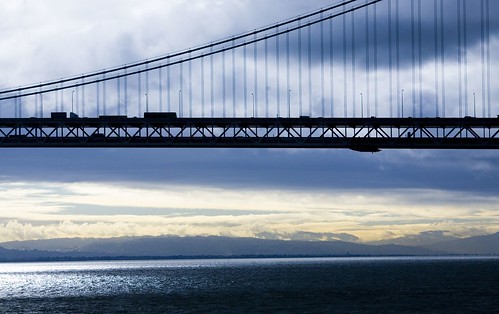
Bridge Addiction

Benches for Ivan

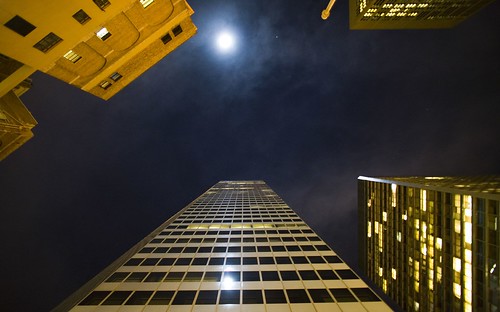
Moonlight on Market Street

San Francisco Bay

And I Heard, As it Were, the Noise of Thunder, One of the Four Beasts Saying Come and See, And I Saw, and Behold, a White Horse
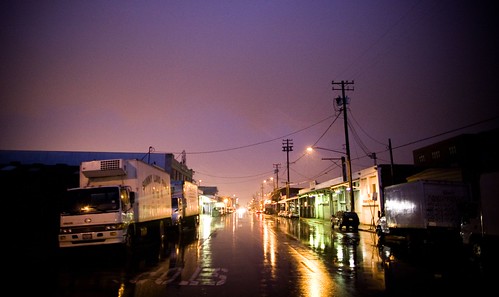
Please Don’t Confront Me With My Failure

Water

Would You Resent Me If I Said That I Missed You?

Eye

Repeat After Me

You’ll Be Loved, You’ll Be Loved, Like You Never Have Known

Tulips

Late Afternoon

Where You Going to Go to Find Illumination?

Sprinklers

Stacked

BART

Along the Boulevard
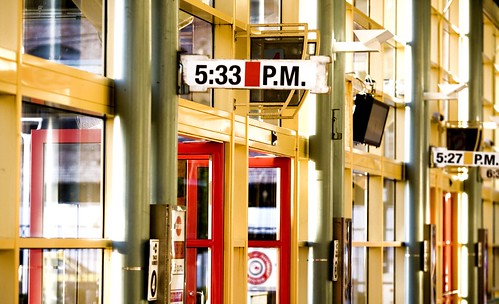
Five Thirty Three


Buck
I Can See for Miles and Miles

Market

Tight Connection to My Heart
Thomas Hawk’s Digital Photoblog February 2006
Thomas Hawk’s Digital Photoblog January 2006
Thomas Hawk’s Digital Photoblog December 2005
Thomas Hawk’s Digital Photoblog November 2005
Thomas Hawk’s Digital Photoblog October 2005
Thomas Hawk’s Digital Photoblog September 2005
Thomas Hawk’s Digital Photoblog August 2005
Thomas Hawk’s Digital Photoblog July 2005
Thomas Hawk’s Digital Photoblog June 2005
Thomas Hawk’s Digital Photoblog May 2005
Thomas Hawk’s Digital Photoblog April 2005
Thomas Hawk’s Digital Photoblog March 2005
Thomas Hawk’s Digital Photoblog February 2005
Thomas Hawk’s Digital Photoblog January 2005
Thomas Hawk’s Digital Photoblog December 2004
Thomas Hawk’s Digital Photoblog November 2004
Thomas Hawk’s Digital Photoblog October 2004
Thomas Hawk’s Digital Photoblog September 2004
Thomas Hawk’s Digital Photoblog August 2004
Thomas Hawk’s Digital Photoblog July 2004
http://thomashawk.com/2005/04/remixing-warhol-ron-english-son-of-pop.html”>Remixing Warhol, Ron English, Son of Pop photographed June 2, 2005
Photoblogging Disneyland, 99 Interpretations of the Happiest Place on Earth photographed May 28 and 29, 2005
Citizen Media Party photographed May 13, 2005
A Night on the Town, photographed May 13, 2005
Flowers of the City, photographed April 30, 2005
I Am Robot, Hear Me Roar, photographed March 26, 2005
Reflections on Manhattan, photographed October 15th – 17th, 2004
See my photos at Flickr here.
Flickr: A Fair Deal
When is it mine? at Jason-Preston.com: Jason Preston weighs in on the debate of who owns the content hosted by Web 2.0 companies, Flickr specifically:
“Here’s the line as I see it: if Flickr provides me with a useful service. If I use them to host my pictures, and they pay for the bandwidth I use displaying them…however much that is…it’s perfectly legitimate for them to use my pictures to try to make up that investment. That’s the way the deal works. They give me something useful, I give them something useful. They don’t (or at least I don’t think they do, and if they do they shoudn’t) own my pictures. I can take them down any time I want. But I certainly license the images to them so that they can stay in business.”
Actually Jason, you are correct, Flickr does not own your photos when you upload them there. Unlike some other photo hosting services, you give up no rights to your photos on Flickr and can take the photos back at any time. You have a variety of ways to license them on Flickr including various creative commons licenses. You also have options to restrict other people from downloading high res versions of your photos etc.
Flickr gives you a great deal of control over how your content is presented and used on their site.
I’m with you on this one. I think Flickr represents a very fair way for the artist and they to relate.
Bill Gates, Ray Ozzie — Analyst and Press Only Event in San Francisco
I’m heading off a little later this morning to an Analyst/Press only event with Bill Gates and Ray Ozzie at the Palace Hotel here in San Francisco. Gates and Ozzie will be “discussing Microsoft’s vision and future direction and preview upcoming technologies from Microsoft.” I saw that Dave Winer was invited to this event as well.
It’s interesting that Microsoft’s PR firm Waggener Edstrom is considering bloggers as press these days. Microsoft and Waggener Edstrom are two companies that seem to get the potential of blogging. Smart move on their part.
Yahoo! Want to Make Some Money?
Vanity searches are hot. How many of us haven’t Googled (sorry Yahoo!) our own names to see what comes up. So here is an idea for Yahoo! that I’ve suggested in the past. Why Yahoo!? Because they’ve got the talent on hand at present to actually negotiate a deal and get something done with the content providers.
Why not unlock the potential of the hours and hours and hours of basically worthless game show video that’s locked up in the vaults of the studios.
How would this work? Well first you’d index the names of every game show contestant that has ever appeared on a game show (you could also add in talk shows as well if you’d like). Certainly all of these people have already signed away all rights to their likeness when they appeared on the game show itself.
Next you put a top search ad for a DVD of the game show that they appeared on for any search for their name. As most advertisers are not clamoring to place advertisements on the names of every day people you have no missed opportunity cost here. The next time they do a vanity search, bamm, there it is.
Then you sell them (or a relative or co-worker or who knows who) a DVD of the game show for $49.95. Why $49.95? Because people would HAVE to have these DVDs. After the first year when you sold all that you could at that price, you could drop the price to $29.95 or $19.95 or wherever the price point needed to be as well as offer actual video downloads. You split the money with the content provider.
Imagine how much fun you’d have at the next company off site when you are able to order a DVD of your co-worker from his youthful appearance just after college on the Dating Game.
My parents appeared on the Newlywed Game back in 1966. Unfortunately after doing some research with a friend who worked for the Game Show Network I was told that shows of the Newlywed Game back in 1966 were destroyed. What I wouldn’t give for a DVD of that show though. It would be priceless.
This is a win, win, win, all the way around. Yahoo! makes money on vanity searches. The content provider is able to squeeze a few more nickels out of basically worthless content. And people get to finally see these lost episodes of themselves or family members that have been locked up for years and years. Like I said, win, win, win — unless of course you happen to be that unfortunate co-worker who appeared on the dating game back after college.
You’d also have the added benefit that this would be an interesting service and you’d receive a lot of free buzz and publicity about it prompting anyone who ever appeared on a game show to do a Yahoo! vanity search for their name. All you’d have to do is just back up the truck and drive away with a big truck load full of cash.