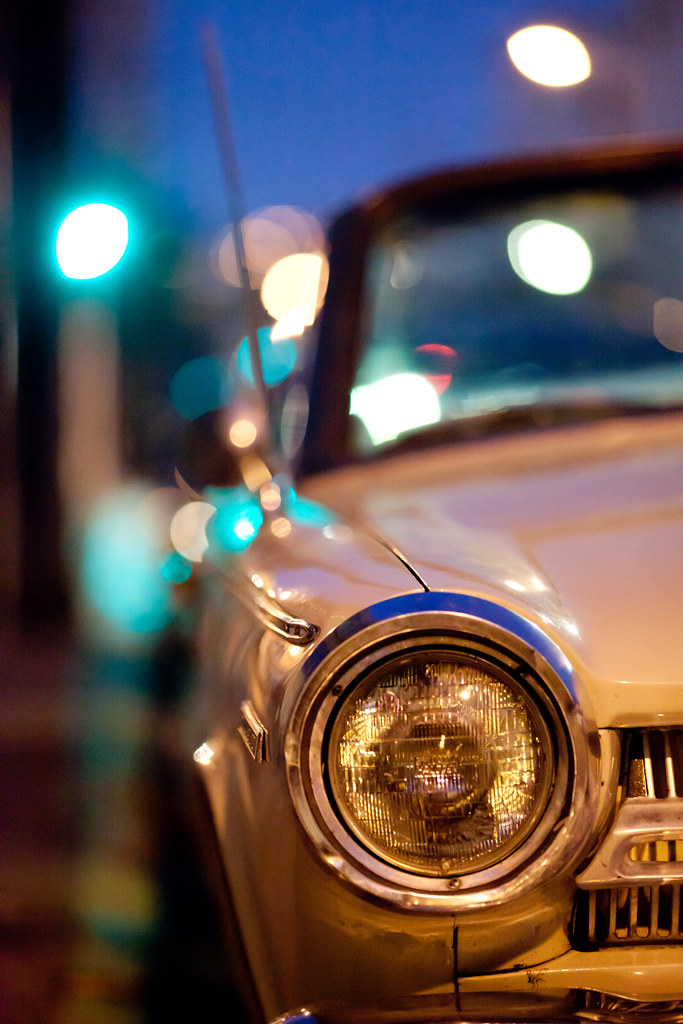
The North American International Auto Show 2012

Apparently There's a New Porsche Coming Out -- Detroit, MI

Over 100 photos of the North American International Auto Show here!

Watch them as a slide show here!

I was pleased to be able to attend the North American International Auto Show (NAIAS) this year as an invited social media guest for The Ford Motor Company. The show opens this weekend, but they give the press a preview day ahead of the opening and Scott Monty, Ford’s Head of Social Media, and his excellent team hosted me and about 150 other bloggers as press for the event.

In addition to covering NAIAS, Ford also hosted us at The Henry Ford Museum and at their world headquarters. Scott also gave me a personal tour inside the historic Ford Rouge River plant where photography is not usually allowed but where I was allowed to photograph (these photos coming soon). Ford really rolled out the red carpet for us and even arranged for us to have a personal interview with Ford Motor Company CEO Alan Mulally along with many other of the Ford executives. Wow!

I’ve photographed a lot of cars and car shows before but never anything as huge or comprehensive as NAIAS. NAIAS is one of the largest automobile shows in the world and I had an absolute blast shooting it. In addition to all of the major car manufacturers showing off their upcoming models, the manufacturers also showcase many concept cars and share new technology ideas that they are working on for the future.

Anyways, I’ll post more on this trip later along with more photos, but here are a little over 100 of my photos of the show. If you like the photos and are an auto enthusiast feel free to share the photos with others. All of my photos are licensed creative commons non-commercial so feel free to use them if you’d like. If you’re a commercial blog feel free to use as well.

Thank you again to Scott Monty and Ford Motor Company for putting so much effort into organizing this trip for a bunch of bloggers. It’s great to see Ford reaching out beyond the traditional press/media channels and recognizing our content and getting us involved in an event like this. It really shows that Ford is a forward thinking company and gets where media is headed in the future.

#FordNAIAS

Top 10 Ways to Improve Google Photos

Top 10 Ways to Improve Google Photos

My friend Trey Ratcliff has an excellent post and poll going on over at Google+ right now asking photographers what their number one ideas are to improve Google Photos. Trey is meeting with the Google Photos team today and wanted to use his post to get ideas to share with the photos team as well as a rank how people feel about them.

What a great idea.

If you haven’t voted yet, hop on over to Trey’s post and check out some of the ideas and vote.

I’m amazed at how open to feedback the Google Photos team has been. It’s nice to see an active team engaged with the community that actually gets it.

Inspired by Trey’s post I thought I’d take a minute myself to put down what I feel are the top 10 ways to improve Google Photos. Some of these ideas are fanciful and would take a tremendous amount of work and some might be easier to implement.

I consider Google Photos largely a work in progress, but a work in progress with a very talented and dedicated team committed to innovation and I’m sure there will be great advancements by the team in the weeks, months, years ahead.

1. Stock Photography. Trey stayed at my place last week and we stayed up late one night doing a hangout and talked alot about the potential for stock photography with Google Photos. If the interent (and Google) are good at anything it’s disrupting inefficient businesses. This currently is the number one idea on Trey’s poll.

I’m currently enrolled in the Flickr/Getty stock photography deal (along with almost 30,000 other photographers if the number of members in the invite only Getty Contributors group are a measure). Here Getty keeps 80% of my photo sales and pays me 20%. That feels like too low of a payout to me. I’m not sure what the right payout should be, but I have a feeling that Google could do better.

The stock photography business is a big complicated complex business though. There are legal and licensing considerations that would scare off many who might like to get involved. I don’t have insight into the Flickr/Getty deal, but I’d guess that the reason why Flickr went with Getty rather than building something out themselves was because Getty has a good history of clearing images and also I’m guessing that Getty indemnified Yahoo over any liability associated with unauthorized image sales.

Google could acquire a smaller stock agency though with experience in clearing images and begin doing what Flickr is doing but with better payouts to photographers. The profit from this business itself wouldn’t be as important as the fact that having this opportunity to sell images would attract even more high quality Pros and advanced amateurs to Google Photos.

Stock photography is not a slam dunk though and Google would have many considerations. Could they protect themselves (and their deep pockets) legally from potential claims? How much money does Getty spend on advertising each year on Google? Certainly competing with them could threaten this advertising revenue. Google has been criticized already for being as fragmented as they are. Would stock photography be yet another distraction and yet another place to create competitors?

On the other hand, giving us a way to monetize our photos on Google Photos would be huge and certainly something that many high quality photographers would love to take advantage of. If anyone has the clout to compete in this world it would be Google.

2. Better album management including SmartSets. At present I’m dumping all of my photos into Google photos one at a time. I’m only using a single album, “Photos from Posts.” It looks really slick (with infinite scrolling!). I haven’t made any other albums because when I do it creates too much noise in my Google+ stream by dropping in tons of smaller sized duplicate photos anytime anyone makes a comment on a photo of mine that I put into an album.

The noise problem is one that Google should solve hopefully over time — but still, making albums is a manually intensive task at Google Photos today. You have to go to each photo one by one and literally copy it into a new album to create albums that overlap each other. This is very inefficient. First of all, actually copying new files when moving a photo to a new album is unnecessary. It’s duplicate storage and you don’t need to do this to better organize albums. And secondly it’s way too time consuming.

Instead Google should let us build albums by tags or keywords. I’d like to create an album of all of my San Francisco photos. Sets of sets or collections would be cool as well.

3. Interestingness by Circles. I know that technically Yahoo/Flickr have patented “interestingness,” but it seems absurd to me that this should prevent another company from sharing popular items.

What would be cool would be if I could view each of my circles by most popular items by day, week, month. I can’t always stay on top of everything and being able to go back and see the highest rated content from various circles would be slick.

4. Google Galleries. No, not online. I mean real, actual, physical Google Galleries. I think that there is a great opportunity for Google to sell fine art prints in a gallery setting. While a physical store is a big expense, I believe that merging digital art with physical art/prints in the physical world is ripe with opportunity. Initially Google would open a couple of smaller galleries in influential places, say San Francisco and New York. They would hire a curator to run the store. The stores would primarily be composed of plasmas rotating art for sale. Visually they would be stunning, clean, light, like an Apple store, with great big plasmas everywhere rotating the latest photos uploaded and cleared for sale by Google Photos. Every day the art would change.

There would be a cafe in the back that sold coffee drinks. This would invite the public in to browse the store and look at the art. There would be special terminals set up where you could search and browse for art by subject. You could, for instance, look specifically for a print to buy of a cable car in San Francisco, or of a cafe in Spain, or of an Amazon Rainforest, or of the Empire State Building — anything. You could search by artist, or subject, or whatever. Some prints could be done on demand – other prints could be done as limited editions being signed by an artist and shipped to you later.

Google Photographers could also hold shows and meetups at these galleries. Rather than me printing up a ton of my work, if I wanted to do a Thomas Hawk show, the plasmas could just rotate to all of my photos for a weekend. I could do an opening and have a show and sell prints much more economically. Google Photos could do meetups at the galleries and photowalks afterwards. How cool would it be if 100 photographers RSVPd for a Google Photos Meet Up where an hour before a photowalk the best photos from those exact 100 RSVPed rotated randomly on giant plasmas throughout the store.

Jen Bekman’s got a lot of great press with 20×200. Could this be a model? Maybe Google could consider her gallery as a jumping off point to partner with or help launch this?

Gallery photos could also be ordered online and shipped as real physical prints as well.

5. Photo Search. Right now one of the downsides of Google+ is that while your photos get a lot of attention when you first post them, they quickly fall off the radar and are buried for good. Google Photos needs a way to reignite long-term activity on these old photos. Search is where this starts. I need to be able to search for photos and then sort by interestingness or most recent. Photo search would drive activity to photos that are past their initial flurry in Google+.

Google should also consider giving great photos from Google Photos preferential placement in Google Image Search where appropriate. The social meta data around photos should give some insight into how strong a photo is. When someone is searching for images of the Golden Gate Bridge, why not send them to Google Photos Photographers with super strong images of the Golden Gate Bridge?

6. Recent Activity Page. Google’s notifications page is good, but it is not as good as Flickr’s Recent Activity page. This page really is the number one page on Flickr and should be the number one page on G+. There is no page there that is more important.

Google should study Flickr’s page and tear it apart every which way from Sunday. It’s quite literally the best and most addictive thing that Flickr does. We should have a customizable (we choose what to hide and see) recent activity page on Google+ that lets us know when people add us, when they make comments on our photos, when they mention us, when they +1 our photos, when they make a comment after a comment we’ve made (it’s very important to be able to hide this specific activity item especially on a one off basis).

Items should be bumped to the top as a new activity occurs on a post. This will make sure that we see a comment someone makes on a 2 week old photo of ours. The current Google+ notifications page feels too cluttered and noisy. Google’s got to get this page right. It’s important.

7. Photo Stats. Photographers love keeping track of the stats on their photos. This gets a little harder with Google+’s streams (what exactly is a photo view for instance?), but something here would be interesting.

8. Google Groups. I know groups are coming. Google bought Fridge afterall. But Groups are important to photographers. Groups have been very popular at flickr. Some thought should be given to how photo games can be created with groups. There are several flickr groups utilizing different voting games. DeleteMe style critique groups/games have been popular on flickr.

Groups on Google+ should have photo tools and even perhaps some built in voting interfaces. Mike Wiacek, a photographer who works for Google, has in fact built the voting interface for some of the voting groups on flickr on his own time. Mike would be a great guy to talk to about how some of these tools might be integrated by default into Google Photos voting games/groups.

9. Google Photo Books. Here Google could buy Blurb or another publisher, or they could try to build it themselves. Letting us create and sell photo books would be amazing. Print on demand is getting cheaper and cheaper and better and better. They could do magazines like HP’s MagCloud as well, but I think books are a better market.

10. Rebrand Picasa to Google Photos. Goole Photos is a much stronger name. This is already rumored in the works. Identity is important and Picasa has a bit of a reputation for being a sort of clunky 2nd best to Flickr.

Google Photos should recognize the goodwill associated with their name and rebrand everything photo related simply Google Photos. This should coincide with a clean up of Picasa’s interface (see smart sets above) and even more integration with Google+. There should be a link to photos in G+ for example that take you to a more traditional photo landing page for that photo simliar to a flickr photo landing page. This page should not be the same as the lightbox. The lighbox view is pretty perfect as is right now (although keywords should be included in the photo details section) and you should be able to +1 photos from this view and even with a simple keyboard command.

Bonus Improvement: Create a tie in between Google’s Reverse Image Search and our Google Photos accounts.

Although it’s not my bag, some photographers get really, really, really, really, really worked up when people use their photos online without their permission. Google’s new reverse image search shows you where your photos are appearing online. It would be cool if with a simple link next to one of your Google Photos you could conduct an image search showing where it shows up. Alot of people concerned about image theft would like this feature.

Photographers (maybe a Pro or Premium feature?) could also sign up for alerts to let them know when new instances of their photos were showing up online. These alerts could be dismissed one by one as much of the use might not concern people. But other unathorized use would concern people and Google’s already built a great reverse image search tool.
So Long New York Times, It Was Nice Knowing You!

Look what just showed up in my email box.

Dear New York Times Reader,

Today marks a significant transition for The New York Times as we introduce digital subscriptions. It’s an important step that we hope you will see as an investment in The Times, one that will strengthen our ability to provide high-quality journalism to readers around the world and on any platform. The change will primarily affect those who are heavy consumers of the content on our Web site and on mobile applications.

This change comes in two stages. Today, we are rolling out digital subscriptions to our readers in Canada, which will enable us to fine-tune the customer experience before our global launch. On March 28, we will begin offering digital subscriptions in the U.S. and the rest of the world.

If you are a home delivery subscriber of The New York Times, you will continue to have full and free access to our news, information, opinion and the rest of our rich offerings on your computer, smartphone and tablet. International Herald Tribune subscribers will also receive free access to NYTimes.com.

If you are not a home delivery subscriber, you will have free access up to a defined reading limit. If you exceed that limit, you will be asked to become a digital subscriber.

This is how it will work, and what it means for you:

On NYTimes.com, you can view 20 articles each month at no charge (including slide shows, videos and other features). After 20 articles, we will ask you to become a digital subscriber, with full access to our site.

On our smartphone and tablet apps, the Top News section will remain free of charge. For access to all other sections within the apps, we will ask you to become a digital subscriber.

The Times is offering three digital subscription packages that allow you to choose from a variety of devices (computer, smartphone, tablet). More information about these plans is available at nytimes.com/access.

Again, all New York Times home delivery subscribers will receive free access to NYTimes.com and to all content on our apps. If you are a home delivery subscriber, go to homedelivery.nytimes.com to sign up for free access.

Readers who come to Times articles through links from search, blogs and social media like Facebook and Twitter will be able to read those articles, even if they have reached their monthly reading limit. For some search engines, users will have a daily limit of free links to Times articles.

The home page at NYTimes.com and all section fronts will remain free to browse for all users at all times.
For more information, go to nytimes.com/digitalfaq.

Thank you for reading The New York Times, in all its forms.

Sincerely,

Arthur Sulzberger Jr.
Publisher, The New York Times
Chairman, The New York Times Company

What a Sad, Weak, Pathetic, Cop Out Response by Yahoo Over Censoring Hossam el-Hamalawy’s Flickr Photos of Egyptian Secret Police

I just read what appears to be an official Yahoo response over the Flickr censorship of Hossam el-Hamalawy, aka Arabawy’s photos. I blogged about Arabawy’s plight over the weekend here and also wrote an open letter to Carol Bartz over the censorship here. TechCrunch also reported on the censorship here.

The response was written by Yahoo’s Director of Business & Human Rights Program, Ebele Okobi-Harris.

There are so many problems with Yahoo’s poor justification for this censorship in this post that I don’t even know where to begin.

I will quote some of their rationalizations for the censorship and try and refute some of their primary points.

Don’t upload anything that isn’t yours.

This includes other people’s photos, video, and/or stuff you’ve copied or collected from around the Internet. Accounts that consist primarily of such collections may be deleted at any time.

This rule applies regardless of content, or of the purpose of the post. The reasoning for this is not only about copyright—and in this case, it’s not a copyright issue. It’s an issue of community: Flickr is meant to be a place where photographers, amateur and professional, can share their own work. Flickr, as a community, does not want to be a photo-hosting site, and anyone signing up for Flickr agrees to those rules, which apply whether one is a proud grandmother or a human rights activist.

This still seems to be the main justification point by Yahoo for removing Arabawy’s photos. The photos he posted weren’t his Yahoo says.

As I pointed out before, Flickr is so chock full of people violating that rule that it’s laughable. Flickr’s *OWN STAFFERS* routinely violate this rule. Flickr’s Co-Founders who still maintain accounts on the site break this rule. Thousands of people on Flickr, literally, break this rule.

Ironically, the *VERY FLICKR ACCOUNT* linked on this Yahoo blog’s page as belonging to the Yahoo! Business & Human Rights Program’s is CLEARLY posting work that is identified as not belonging to the account owner. A clear violation of Flickr’s rules by the very same blogger justifying the rule in the first place.

Are there times when this rule should be applied? Sure. Like, you know, possibly when there is a REAL copyright dispute (which this blog post already has said was not the case here), but again, not the case for Arabawy.

Are there other times when it should be ignored? Sure. Would Flickr remove a photo of co-founder Stewart Butterfield that another photographer had taken of him (and probably gave him permission to post) that he posted to his flickrstream in clear violation of this rule? Of course they wouldn’t. Nor should they. That would be stupid.

I have heard from some activists who believe that Flickr applies the rule unevenly; they have pointed out other photographs, including others from Mr. El Hamalawy’s account, that also appear to be photographs that were not taken by Mr. El Hamalawy. Here’s the thing: with millions and millions of photographs and Flickr accounts, Flickr does not have the ability to proactively moderate for photographs that were not taken by Flickr users. Flickr reactively responds to reports from Flickr community members.

Untrue.

Yahoo seems to be saying that they basically ignore the rules of their site unless someone is reported for breaking the rules and then they take action. There are many accounts on flickr who have broken the rule of not posting your own work AND have been reported but that have not been censored.

The fact of the matter is that being reported on Flickr doesn’t automatically result in flickr enforcing the rules. It merely flags the account and allows flickr to make a decision as to whether or not they will act. Although I do not have access to all reported account issues on Flickr, I can guarantee you that there are other times when Flickr has chosen not to enforce the “not your work” rule. I have firsthand knowledge of some of these cases in fact.

What about the stated purpose of a community or semi-public space? Flickr was created specifically to allow photographers to share their work.

Yeah? then why is the blogger’s own linked flickr account on the very page justifying the censoreship showing work by OTHER PEOPLE as shown above and as a CLEAR VIOLATION OF FLICKR’S RULES? The hypocrisy doesn’t get much richer than this folks.

I am a passionate supporter of free expression as a fundamental human right, and I believe strongly in the idea that technology and social media provide incredible opportunities to create social change. I also know that millions of people use Yahoo! products, including Flickr, to create their version of the change they wish to see in the world. That’s a tremendous privilege, and a huge responsibility.

While it is admirable of Yahoo to try and put a human spin on this bad PR story and try to justify what they did here after the fact by using an employee who probably is in fact dedicated to human rights, the fact remains that what Yahoo and Flickr did does NOT support free expression as a fundamental human right. It does NOT support the idea that technology and more specifically Flickr should be used to create social change.

The decision to censor Arabawy’s photos of alleged TORTURERS was a bad one all the way around. It was bad from a human rights perspective. It was bad from a freedom of speech perspective. It was bad simply from a pure business perspective as I outlined in my letter to Carol on Sunday.

Rather than Yahoo trying to offer a completely lame cop out corporate rationalization for this act of censorship, they should own up to it, apologize for it, reinstate Arabawy’s photos and say that they will try to do better in the future.

Amicable Settlement With the World Erotic Art Museum

Recently I posted a large number of photographs of works of art housed at the World Erotic Art Museum in Miami Beach. I also posted blog entries accusing the World Erotic Art Museum of fraud in defensively responding to my unauthorized posting of the photographs. After discussions with the World Erotic Art Museum, I have decided to remove all of the posted photographs and to retract all of my prior blog entries that may have caused World Erotic Art Museum and its owner Naomi Wilzig embarrassment. I commend the World Erotic Art Museum for the collection it has compiled over the past many years. Its efforts have resulted in a collection that will hopefully be available for enjoyment by generations to come and I encourage everyone to visit World Erotic Art Museum and discover it for themselves. I took the photographs for my own private use and posted them as an individual without authorization. I was not asked by the World Erotic Art Museum to take the photographs or to post them on its behalf nor was I authorized by World Erotic Art Museum or any representative of World Erotic Art Museum to do so. I formally retract all of my prior posted blog entries related to World Erotic Art Museum and accusing them of fraud. I sincerely apologize to the World Erotic Art Museum and its owner Naomi Wilzig for any embarrassment, negative light or bad press that my posting of the photos or blog entries may have caused them.