 Accountant Ivan Makarov has an excellent post over at his blog regarding how taxable income and expenses are treated for the part time photographer:
“You must declare all income you get from photography, and you may offset it with your expenses if it is a business. In the eyes of the IRS, it is a business when it is ran with for-profit motive. The test that is typically used to determine whether it is a hobby or a business is the level of profitability. If the business has been profitable (generated more income than expenses) for 3 out of the last 5 years, it is a business, and if in the current year taxpayer has a net loss when items of income are netted against expenses, that loss can be used to offset other income. If you do not meet the test, the IRS considers your photography a hobby, and deductions allowed will be rather limited.”
Continue reading here.
What is Visualization? Rare Unreleased Ansel Adams Footage
The Key to a Photograph from Ansel Adams from SilberStudios.Tv on Vimeo.
Mark Silber, over at Silber Studios Blog, was able to obtain the rare Ansel Adams footage above. In the short clip Ansel Adams talks about visualization. The process whereby a photographer sees a photograph in their mind’s eye before and during the making of photograph.
Experiencing visualization is a powerful thing. Most of the time when I’m shooting I do not experience visualization. I shoot many, many shots every day and many of these shots are meant to be more part of a documentary river than anything for me. With many of these shots in fact I don’t really see the shot from the subject until later in post processing.
But every so often I see a photograph ahead of the actual shot. I do see it in my mind’s eyes. And these I feel are among the best photographs I’ve personally made. Every so often you see a scene or a person or an opportunity for a shot and you take it instantly recognizing that it is special and seeing the finished photograph as you view it through the viewfinder before you’ve even pushed the shutter.
I need to challenge myself to look for more of these moments and photographs. They are all around us every day. And it’s amazing when you get them. That feeling of knowing deep down inside that you really got the shot. That you’ve really created something meaningful in the seconds that surround the birth of a photo is one of the best feelings a photographer can know.
Thanks to Marc and the Ansel Adams Gallery as well for sharing with us this rare footage by Ansel Adams himself directly on the visualization process as he viewed it even so many years ago.
Microsoft Future Pro Photograher Contest
The Microsoft Future Pro Photographer contest is a great contest put on for student photographers. If you are presently a student at a two or four year advanced degree institution and are over 18 years of age you are eligible to submit photos. If you are a college student this is an excellent contest to participate in and possibly win up to $20,000.
Submissions are being accepted from March 1, 2009 to April 30, 2009 and the winner will be announced at the Microsoft Pro Photo Summit this July. The Grand Prize winner will receive $20,000 in addition to three of First Place winners in categories of Nature and Landscape; People and Portraits; and Sports and Photojournalism who also receive a cash prize of $3,000; all winners will receive a digital workflow prize package as well.
All entrants can submit up to three original images in the following categories: nature & landscape; people and portraits; or sports & photojournalism. The image must be a JPEG that is no larger than 1024 pixels and 2MB. Each image will be treated as one entry. These images must not be published, released or distributed for commercial use and must be created and owned exclusively by the entrant submitting the image. Each image will be judged on its originality, technical execution (focus, exposure), visual impact (composition, impact, lighting) and relevance to it’s category (nature, portrait, sport). All rights remain with the photographer. Microsoft will only use winning images, with photographer credit, for the sole purpose of promoting the contest.
You can learn more about the competition here. A video of last year’s winners is here.
36 Hours in Reno
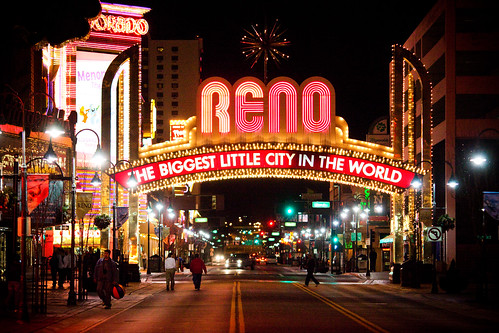
Weekend before last I packed up the Buick with mrsth and the kids and headed out to shoot the “Biggest Little City in the World,” Reno Nevada. I’ve been meaning to shoot Reno for a while now, but somehow just never quite made it out there. I’ve been to Vegas dozens of times, but Reno’s always remained that elusive stepsister of Nevada just out of my reach.
I’ve known that I’ve needed to shoot Reno for years of course. I’m collecting images of neon signs and the neon in Reno really is best in class. Maybe it was the worsening recession that finally convinced me. Every day more and more neon signs are coming down. But whatever the case, I made it to Reno just in the nick of time.
I spent most of my time in downtown Reno and the best way that I can describe it is that it felt a hell of lot like post Katrina New Orleans. When I visited New Orleans after Katrina I was struck by how devastated the place had become, how broken in many ways the city and the people who lived there were, but at the same time how underlying their desolation was a sort of friendliness and even joy that you found most places you went. Reno felt a lot like that to me.
Vegas has an ugly underside, but for the most part they keep it away from the strip. The homelessness, the drug addiction, the prostitutes. They are all there in Vegas if you want it, but you really have to look for it. You can’t say the same for Reno. The despair is thick — both in terms of the people and business. Dozens of motels, casinos and businesses are dark in Reno. I’ve heard that downtown Reno’s always had its trouble, but throw in the worst recession of our lifetime and it’s gone from bad to worse.
There’s an eerie feeling walking down the main strip in Reno. 40 feet or so from Reno’s most famous sign welcoming you to the “Littlest Big City in the World,” Fitzgeralds, a 15-story or so major casino/hotel, sits dark. A hand made sign on the door reads, “we’re now closed, good luck.” Next to the hand written sign is a photocopied piece of paper directing “persons holding the bona fide chips and tokens of Fitzeralds” to Alamo Travel Center in Sparks Nevada to redeem them.
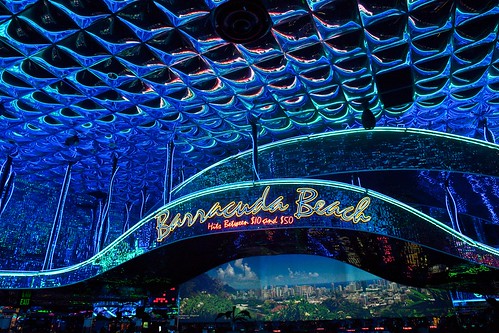


Next to Fitzgeralds the Phoenix hotel and casino is dark too. For the most part the streets are empty. Music plays but the feeling is quiet. Drunks and homeless hang out in front of the McDonald’s across from Circus Circus asking for money. In the light of the neon sign on the strip you read a hand made sign on a pawn shop offering top rates for wedding rings. Even the best hotels are cheap to stay at. We booked the El Dorado at $42 a night. That’s less than I paid to stay at the Motel 6 in Fresno last Fall.
As you wander out beyond the strip the blight continues. Fantastic vintage neon signs at motels like the the Town View Motor Lodge and the Down Towner hanging on the sides of the dead buildings. The motels boarded up, weeds growing in their plaza planters and no trespassing signs posted. The motels that are still open have signs offering $500 move in specials. They seem less like motels and more some sort of transitory housing for those without.
Dry cleaners, corner markets, overbuilt apartment complexes, office parks, restaurants, so many of them boarded up, shut down. Signs are everywhere. For sales signs, beware of dog signs,”don’t pick flowers,” a plastic sign affixed to a motel reads. A sign hangs in a camper on a truck with a flat tire, “$800 obo.”
“You know there was a fire at that motel,” says the stranger to me, pointing over to the Leo Court Motel. “A guy killed himself in there.”
“It’s interesting how the birds keep swaying back and forth up on the top of the sign,” I answer back continuing to fire off shots at the sign.
I spent a bit of time Saturday morning hanging out in front of the Greyhound bus station. I shot Claudia there. Claudia told me that she was from San Francisco. That she was at the Greyhound station to head home. She said that she still had one more night on her room but that she’d lost her $200. She explained to me though that when she said she “lost” her $200 that she hadn’t lost it gambling that she’d literally somehow lost it out of her pocket. As she smoked her cigarette she told me about her family back in San Francisco. Her grandkids. Her apartment. She was heading back, heading home.
I was surprised at how willing so many people in Reno are to have a conversation with you. Strangers on the street stopped me several times. Asking me what I was doing, why I was taking pictures. Many of them gave me the same advice over and over again. Be careful, they said. You have to be careful walking around with a camera like that they reminded me repeatedly. Don’t go in this area or that area they’d say. Gary told me that the drug addicts were the worst ones on the street. I asked Gary if I could take his portrait and he said ok. He asked me if he was going to be famous. I told him maybe someday, if I ever became famous, you never know.
As beaten down as so much of Reno seems, there is a genuineness to the people there. As I sat for a while listening to Roger’s story about mining and fishing in the hills outside Truckee he was rolling a cigarette with his loose leaf tobacco. Before he could finish, another guy who looked worse for the wear than Roger stops and hands him three cigarettes from his generic pack. “Here you go brother,” he says to Roger.
Roger looks up and says “thank you kindly,” as the generous stranger keeps walking on his way. An odd sort of random act of kindness between two down and out smokers.
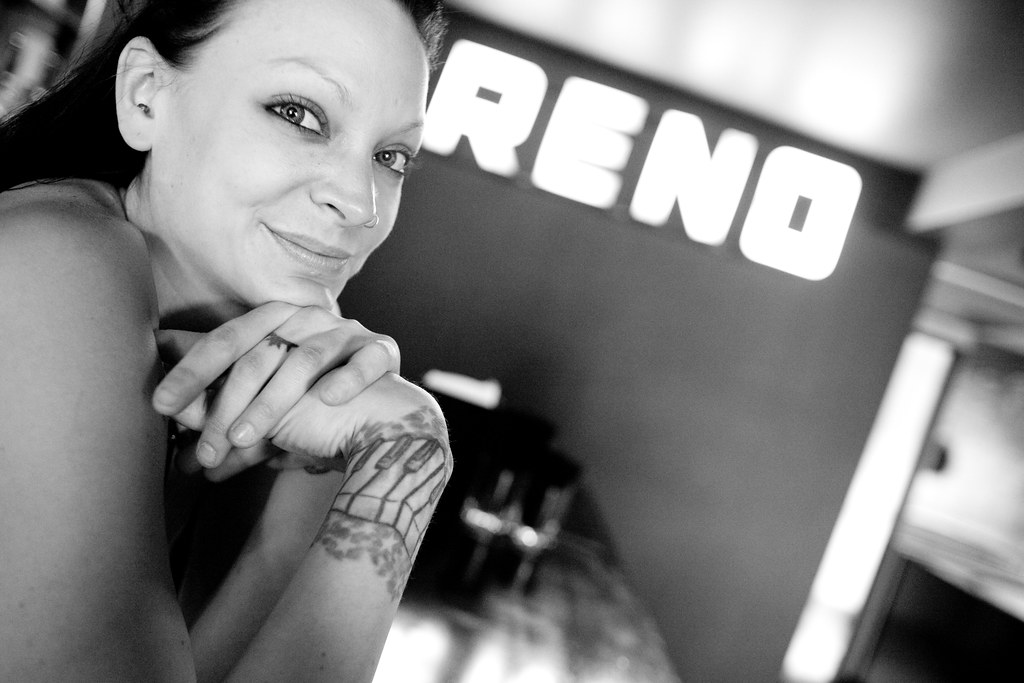
And then there was Georgia, even more beautiful on the inside than she was on the outside, which is definitely saying something. I ran into Georgia while shooting the Society Cleaners neon sign now hanging in the St. James Infirmary bar. I’d been by Society Cleaners earlier that day and had been told that the old neon sign that used to hang outside had been taken down. That it now lived in the bar over on California Avenue. I went into St. James Infirmary to shoot the sign. Nobody was in the bar except Georgia when I stepped in and asked if I could shoot it. “Why not,” she answered back to me.
We talked for a few minutes about my photography while I shot the sign. And then about her writing and music (she’s in the band Pushbox). She bought me a beer and then spent the next three hours talking to me about anything and everything, posing in between the conversations and pouring beers. It’s not everyday that you luck into a bar with perfect natural light and a beautiful bartender who loves to pose. These are my most prized photos from the trip. Georgia shared with me about the self help book she’s writing. About how she’d learned to eliminate judgment from her life. I showed her various sets of my photography. It was pretty damn good.
Before long a parade of Irish themed patrons filled the afternoon bar. Guys in kilts, woman with shamrock headbands — apparently the crowd was part of some sort of pub crawl. You pay $1 to about 20 different bars per beer and drink all afternoon. I shot one couple. Then another couple. Then a guy, then two women. Everyone seemed amenable and friendly. What started out as a two minute stop in to shoot a Society Cleaner’s neon sign, turned into a three hour bar shoot. Fond memories of St. James Infirmary for sure. One of the best damn bars I’ve ever had the pleasure to drink and shoot in.
After four beers or so I left St. James Infirmary to meet back up with mrsth and the kids for dinner and then on to even more shooting with them in tow at the Peppermill Casino and Resort (which is the grandest neon palace in all of Reno). I figured that I’d best get a big boost of caffeine to keep me going into the rest of the night and stopped by Starbucks.
I’m not sure if it was the four beers I’d had or just a high from my Saturday of shooting, but I asked the Starbucks cashier if I could take her portrait. “No,” she answered quickly and then gave me one of those you are wayyyy too creepy for me looks. I laughed to myself and grabbed my double shot of something or other and quickly crossed the street. Aces tattoo was there and they had both a neon sparrow and a neon nude and the sky had turned the perfect color of blue.
As it turned out the Peppermill was the mecca of all meccas for the neon photographer. More square miles of neon in one place than any place I’ve ever seen. I’ve never done acid, but someday if I do I’ll be heading back to the Peppermill for the experience. I don’t think I’ve ever filled up an 8 gig card in less than 15 minutes before. That’s the Peppermill for you.
I’ve uploaded 25 or so of about 450 of my Reno shots that I’ve processed so far. You can see those here. I’ve only processed about half my shots, so there will be many, many more shots of Reno coming in the weeks and months ahead. In total I shot about 4,000 frames in 36 hours. I think I’ll end up with close to 1,000 finished photographs from the trip when all is said and done.
Transform :: A short film for ScottKelby.com
Photographer Zack Arias has a thoughtful and inspirational video that he made about his photography. This is one of those videos that you will definitely want to watch through to the end. It changes course pretty significantly about 1/3 of the way into it. Do yourself a favor and click on the full screen togle for this one.
(Thanks, A Photo Editor!)
Should Photographers Be Allowed to Photograph the Flag Draped Caskets of Killed US Soldiers?
 “I think it’s very dangerous for a free society to have all the information distilled and packaged by our government and given to us. Do we know to this day who we killed in Iraq? I don’t think so. If bringing war into the living room means that we as a people will say we don’t want to do it that way anymore we want to figure out other ways to solve these conflicts, then I would say that photography and television have done us a great service.”
– Michael Deaver, former Deputy White House Chief of Staff
An interesting article in the NY Times yesterday about photographing the coffins of fallen U.S. soldiers. According to the NYT, Defense Secretary Robert Gates has ordered a review of a military policy which prohibits the media from photographing the coffins of U.S. servicemen and servicewomen.
From the NYT:
“He said he was ordering a review of the military policy that bars photographers from taking pictures of the return of the coffins, most of which are coming from Iraq and Afghanistan and go through Dover Air Force Base in Delaware. He also set a “short deadline” for a decision. The military has said the policy is meant to protect the privacy of the families of the dead soldiers and maintain dignity. But skeptics, who include some families as well as opponents of the war in Iraq, say that the bodies in the returning coffins are not publicly identified, so privacy is not an issue, and that barring photographers is a political maneuver meant to sanitize the war.
The policy was put into place in 1991 during the first Gulf war and was renewed by the Bush administration as recently as a year ago when, Mr. Gates said, he raised the possibility of changing it. He said he was told — he did not say by whom — that allowing photographers would put undue pressure on families to go to Dover themselves and that in some cases that would be a hardship.”
My own personal opinion on this one is that you have to put the privacy of the families of these soldiers up against the broader rights to a free press and free speech. Given that there is no identifying information being photographed on these flagged draped caskets, I’d probably lean towards having this rule by the military overturned.
One thing that has been troubling to me about the war in Iraq is how restricted a free press has been. The quote above comes from former Deputy White House Chief of Staff Michael Deaver. Deaver said that in the documentary “American Photography, A Century of Images.” In that documentary Deaver talked a lot about how restrictive photography has become for war reporters.
Many cite the gut wrenching imagery coming from the Vietnam war as being a large part of what eventually ended that war. Even more than video, still images can evoke a power that is unmatched. A naked napalmed girl running down a road. A Buddhist monk lighting himself on fire, Eddie Adam’s famous image of an execution of a Viet Cong. These images leave an indelible imprint on our emotions and thinking.
Having learned how the opposition to the Vietnam War used these images, the current U.S. Military has been far more restrictive with photography in Iraq and Afghanistan. In addition to prohibiting photographs of things like caskets, the U.S. Military has been even more restrictive on the battle field.
In an article by Michael Kamber and Tim Arango in the NYT, they dig deeper into the pro-censorship policies of the U.S. government asking the question why are there 4,000 U.S. deaths and only a handful of images. In that article they report on the story of Zoriah Miller, a war photographer who took images of marines killed in a suicide attack and then faced tremendous professional repercussions from Maj. Gen. John Kelly who worked to have Miller barred from all U.S. military facilities throughout the world.
From the NYT:
” “It is absolutely censorship,” Mr. Miller said. “I took pictures of something they didn’t like, and they removed me. Deciding what I can and cannot document, I don’t see a clearer definition of censorship.”
The Marine Corps denied it was trying to place limits on the news media and said Mr. Miller broke embed regulations. Security is the issue, officials said.”
Seeing coffin draped caskets may make us all feel uncomfortable. But sometimes that’s what good photography is supposed to do. It’s supposed to make you feel uncomfortable. What do you think? Should the U.S. Military begin allowing photographers the ability to photograph flagged draped caskets of U.S. soldiers?
Shepherd Fairey Strikes Back, Counter Sues the Associated Press
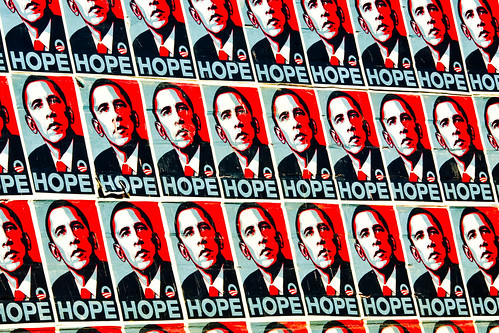 Last week I reported on the continuing controversy regarding Shepherd Fairey’s iconic image of President Barack Obama. The Associated Press had declared copyright over the image that Fairey used to make his HOPE image and now in a pre-emptive strike, Fairey has filed a lawsuit seeking to legally have his art declared as fair use.
From the NY Times:
“Mr. Fairey’s lawyers, including Anthony T. Falzone, the executive director of the Fair Use Project and a law lecturer at Stanford University, contend in the suit that Mr. Fairey used the photograph only as a reference and transformed it into a “stunning, abstracted and idealized visual image that created powerful new meaning and conveys a radically different message” from that of the shot Mr. Garcia took.
The suit asks the judge to declare that Mr. Fairey’s work is protected under fair-use exceptions to copyright law, which allow limited use of copyrighted materials for purposes like criticism or comment.
“Fairey did not do anything wrong,” said Julie A. Ahrens, associate director of the Fair Use Project and another of Mr. Fairey’s lawyers, in a statement on Monday. “He should not have to put up with misguided threats from The A.P.” Paul Colford, a spokesman for The A.P., said on Monday that the agency was “disappointed by the surprise filing by Shepard Fairey and his company and by Mr. Fairey’s failure to recognize the rights of photographers in their works.” “
It will be interesting to watch how the courts rule on this one. Still in question as well is whether or not the A.P. even actually own copyright on the original image given that photographer Mannie Garcia took the image without any contract with A.P. and is not an employee or even a freelancer for A.P.
Mack Camera, A Good Place for a Camera Warranty
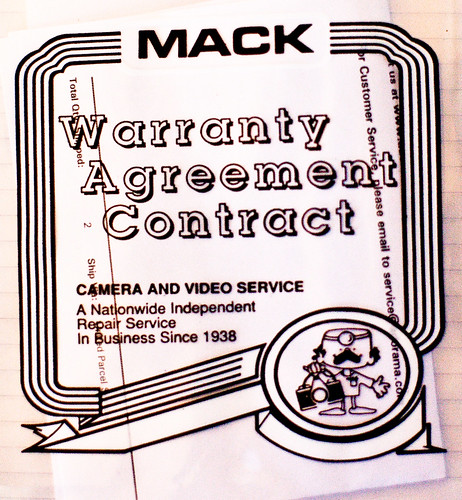 Normally I’m not really big on extended warranties. Most of the time I find them to be too expensive and something that I never use. Oftentimes when you buy a technology based product, by the time it breaks, technology has advanced quite a bit and you’re in the market for a new product anyways. But there is one place that I make an exception for me personally and that is for a camera warranty.
On both my new Canon 5D Mark 2 as well as my previously purchased Canon 5D I bought a three year extended warranty from Mack Camera. There are a number of reasons why I bought these warranties. First and foremost I use my camera very heavily. I’m sure much more than the average consumer. To the extent that warranty prices are made of averages, in general, I’d say if you plan on using something much more than average you might want to consider a warranty beyond what the manufacturer provides.
I use/used both my old 5D as well as my new 5D Mark 2 every single day. I put far more wear and tear on them than average.
Another reason why I bought warranties on both of my cameras is that both cameras were pretty expensive when I bought them — between $2,000 and $3,000 at purchase. If I’m buying a $100 tech toy, a warranty is probably not necessary. But if I’m buying a camera this expensive, I like having the insurance, so to speak, in case something does go wrong. Digital cameras have *a lot* of moving parts. There is a lot of room for things to go wrong.
I will say that when I bought my original Mack Camera warranty on my old 5D, in the back of my mind I wondered how well it would be handled if I ever had to use it. Certainly I took far more frames on my old 5D than the 100,000 rated frame life. By the time I sent it back to Mack Camera for repair it really was on its last legs. It wouldn’t power up. I couldn’t shoot any photos faster than 1/250th of a second. The internal battery was dead. I was missing most of the screws in the bottom of the camera. It was pretty much toast.
I’m happy to say that despite my heavy, heavy use (some might even argue abuse), Mack Camera did a fantastic job handling my camera and honoring their original warranty. Other than a $10 charge to pay for shipping, I did not have to pay any money associated with my repair order. Mack Camera consistently kept me in the loop regarding my camera. They could not repair the camera there at their shop due to corrosion that had taken place inside the camera, so they sent it back to Canon for repair.
And then last week I received my repair back from them. It wasn’t my old 5D, it was in fact what looked like a brand 5D or a maybe a refurbished one — but whatever the case it was in *great* and near perfect condition. I’m assuming that as broken as my old camera was that it was simply cheaper to send me a new or refurbished unit than to actually repair it.
I was very pleased with the service and communication received from Mack as well as the end result from my experience with a warranty with them. I’m glad that I got another Mack Warranty on my new 5D M2, and I’d highly recommend Mack to anyone else considering an extended warranty on their digital camera.
It’s not every day that we get to say “good job” and thanks for the great service to a company. Most of the time we’re (or at least I am) happy to bitch about things when they go wrong, but sometimes things don’t always get the same attention when they go right.
I wanted to write this blog post up on Mack Camera today because I think it is an example of a company doing things right and I was pleased with how they handled my repair order.
I’m also going to take a few minutes later today to repost this positive experience over at reseller ratings, where people can rate their experience with Mack.
If you want to find a dealer to purchase a Mack Warranty on your own camera, you can do so here. I know that Mack Warranties are available on most, if not all, cameras from both Adorama and B&H Photo at the time of purchase. Also, as a reminder, if you order a warranty from Mack, make sure that you register your warranty on their web site within the first 30 days of purchase.
On another note, I’ve gotten lots of inquiries regarding my old Canon 5D and whether or not I’d want to sell it. I think that I’m going to keep it though. As much as I *love* my new 5D M2, I think having a good back up body is important and my old 5D is an excellent backup body. Also my wife likes to go out shooting with me a lot and it will be nice for her to use the 5D instead of my old 10D that she was using before.
The Associated Press Says That They Own Famous and Iconic Shepherd Fairey Obama Image, Photographer Mannie Garcia Says, “Not So Fast”
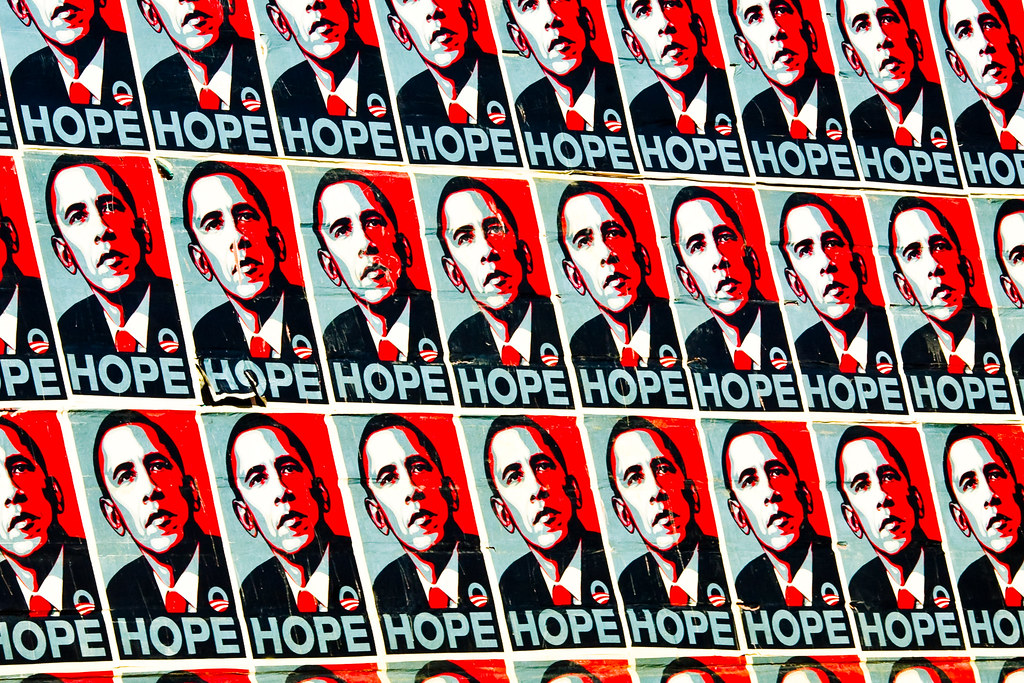
The Associated Press is out this morning claiming copyright ownership to what will certainly be considered one of the most famous and important images of this century.
The image in question was also one of the most used images in the Barack Obama Presidential Campaign and also now sits in the National Portrait Gallery in Washington DC. The image was seen all over the United States, from graffiti in San Francisco to dorm rooms in Iowa. And apparently now the Associated Press has decided it wants to muscle in on a little of the ca-ching going on.
““The Associated Press has determined that the photograph used in the poster is an AP photo and that its use required permission,” the AP’s director of media relations, Paul Colford, said in a statement released Wednesday. “AP safeguards its assets and looks at these events on a case-by-case basis. We have reached out to Mr. Fairey’s attorney and are in discussions. We hope for an amicable solution.”
Anthony Falzone, Fairey’s attorney, says fair use protects his client’s rights from using the photograph as a basis for his image. The concept of fair use allows breaches of copyright law based on the degree to which the original image is used, among other factors.
Fairey, a Los Angeles street artist, has said he found the image online and created his now-famous depiction in early 2008. He says he has not profited at all from the work, which he donated to the Obama campaign.”
Fairey is claiming fair use rights, but the bigger question really is does the Associated Press even *own* this image at all. If it turns out that they do not, they may come out looking like even more like the idiots that they were painted out as a while back when they decided that they wanted to start going after bloggers for quoting their stories.
Both Shepherd Fairey and the photographer who took the original image, Mannie Garcia, agree that the image was originally taken by Garcia. And now Garcia is saying that he owns copyright on the image not the Associated Press. It also seems that Garcia is a really cool guy and while wanting to be recognized as the original photographer, he isn’t trying to milk this thing for all it’s worth personally like your friends over at AP.
In an interview over at Photo Business Forum, in fact, Garcia has said that the majority of any money due him from this photo at all he’d like to see go to charity.
“Now, monies – monies that might be made by me signing my photograph. I am concerned, that the image out there – I would like very much to figure out a way that my signature on a photograph that I made of then Senator now President Obama, that maybe the monies = most of it – could be donated to the American Red Cross, children’s cancer research, and women’s breast cancer research. This is not about me making money off this, it’s about recognition. I made the most iconic image of our time, and I’d like it to make a difference, not make me money. I’m a blue collar photographer – I am out there on the grind every day. I spend more energy looking for work than doing work. I just want Shepard Fairey to say “alright, you’re the guy. Thank you.””
In terms of the APs claim of ownership of the image, Garcia states that he was not a staffer for the AP when he took it, that he wasn’t even an AP freelancer, but rather a temporary hire with no contract and that the ownership of the disputed image belongs to him.
And I think he just may be right on this. Without a contract with him signing over his rights to his photos to AP, as far as I’m aware Garcia ought to own the rights to his work.
Now there are a lot of ways this might unfold. It might be that it doesn’t matter if the AP or Garcia took the original image, that it’s use might be considered fair use. I’m not an attorney, but I think there is a real case to be made here.
It might also turn out that AP has no rights to the image. They have no contract with Garcia and sans contract any ownership of the image likely would go to him.
Personally I think it’s very unlikely that the AP will get control over this very popular image. Which means that they may end up looking like money grubbing jerks yet again if/when they lose. Even if they win, enough people are probably impressed with the way that Fairey gave all of the money made on the image to the Obama campaign that they’ll still end up looking bad trying to squeeze him.
If the AP were smart, I’d think that they’d be better off right now from the start agreeing that no money would go to them if they do have any coming, and that instead any money raised would go to charity and Garcia. Garcia could of course also choose to give his portion largely to charity as well if they recovered any.
It will be interesting to see how this one turns out.
Should You Give Away Your Photos For Nothing To People Who Can Pay?

I license all of my photos on Flickr Creative Commons, non-commercial. This basically means that anyone can use them for personal use. It also means that non-profits and others can use them.
What it doesn’t mean is that commercial entities can use them for free.
I get asked almost every single day from people whether or not they can use my photos for things or not. These requests range everywhere from a ten-year-old asking me permission to use one of my lady bug photos for her book report (which is very cute) to major companies asking to use them. Many of the requests fall within the creative commons license, but either people don’t understand that or want to ask anyways.
My own general rule is that I, of course, always say yes to appropriate non-commercial or personal use. When the nature is commercial I generally feel out the situation. A lot of people who ask me to use my images for commercial use are pretty cash strapped. I’ve had unsigned bands ask me to use images for album covers. I’ve had first time authors ask me for permission to use my images for their new book. I’ve had poetry journals want to use them. You get the idea. Generally speaking, I tend to allow commercial use of my images to anyone that I feel can’t easily afford to pay for whatever reason. I consider it good karma.
Oftentimes people that use my photos this way will send me a CD from the band, a copy of a book or publication etc. Once I let this band Science for Girls use my images for free for their CD and Darren Solomon, the producer for the small band, later contacted me with an opportunity to use other images for a commercial project where I was paid. Goes around, comes around. It makes you feel good.
A lot of times I get requests from people though who truly can afford to pay. A law firm once used one my images for their company Holiday card, major corporations have used my photos in print or TV ads. My photos have been used in magazines, for greeting cards, for text books. Really all kinds of use. With these buyers I usually negotiate a price I think is fair based on the use. Sometimes $50, sometimes $100, sometimes $500. It just all sort of depends. I’m pretty flexible.
One thing that does bother me a bit though is when companies that clearly can pay, ask for your images for free. They certainly are free to ask, but generally I say no to these people and it does rub me a bit the wrong way seeing large profitable corporations trying to get something off the backs of a community like Flickr for free. On Monday night on our photowalk I was talking to some of the other photographers about this and Jon Bauer mentioned receiving an email from GQ asking to use his images for free. It seems GQ is the latest company looking to score free images off Flickr.
So today I wasn’t surprised to get my own request on one of my images from GQ (photo above):
The email went like this:
“My name is [redacted], and I work in the GQ magazine photo department. I am trying to acquire images of The Griffin in Las Vegas for use on our website. We are going to launch GQ’s online guide to Las Vegas in two weeks and we would love to include one of your photographs.
Generally, I would never ask for something for nothing. However, at this time we are only able to give credit. If that is okay with you and we can have permission to use one of your images, it would be greatly appreciated.”
Now in GQ’s case I’m going to say no. GQ is owned by Conde Nast. Conde Nast is owned by Advance Publications. Advance publications is owned by the descendents of S.I. Newhouse. These are the mega wealthy of the world. Forbes Magazine ranked Advance Publications as the 41st largest private company in the United States last year. For a major company to try to beg photos for free off of Flickr is bad form in my opinion. And at a minimum they should think about offering a free subscription or something.
I feel that I’m very generous with my photography. Maybe to a fault. And I really like helping people out who I think ought to be helped out. But I’m not so sure that seeing major for profit companies begging photos off Flickr is the best thing for anyone.
My two cents for what it’s worth.