Robert Frank Arkansas State Police Arrest Report, December 19, 1955
Department of
ARKANSAS STATE POLICE
Little Rock, Arkansas
December 19, 1955
Alan R. Templeton, Captain
Criminal Investigations Division
Arkansas State Police
Little Rock, Arkansas
Dear Captain Templeton:
On or about November 7, I was enroute to Dermott to attend to some business and about 2 o’clock I observed a 1950 or 1951 Ford with New York license, driven by a subject later identified as Robert Frank of New York City.
After stopping the car I noticed that he was shabbily dressed, needed a shave and a haircut, also a bath. Subject talked with a foreign accent. I talked to the subject a few minutes and looked into the car where I noticed it was heavily loaded with suitcases, trunks and a number of cameras.
Due to the fact that it was necessary for me to report to Dermott immediately, I placed the subject in the City Jail in McGehee until such time that I could return and check him out.
After returning from Dermott I questioned this subject. He was very uncooperative and had a tendency to be “smart-elecky” in answering questions. Present during the questioning was Trooper Buren Jackson and Officer Ernest Crook of the McGehee Police Department.
We were advised that a Mr. Mercer Woolf of McGehee, who had some experience in counter-intelligence work during World War II and could read and speak several foreign languages, would be available to assist us in checking out this subject. Subject had numerous papers in foreign langauges, including a passport that did not include his picture.
This officer investigated this subject due to the man’s appearance, the fact that he was a foreigner and had in his possession cameras and felt that the subject should be checked out as we are continually being advised to watch out for any persons illegally in this country possibly in the emply of some unfriendly foreign power and the possibility of Communist affiliations.
Subject was fingerprinted in the normal routine of police investigation; one card being sent to Arkansas State Police Headquarters and one card to the Federal Bureau of Investigation in Washington.
Respectfully submitted,
Lieutenant R.E. Brown, Lieutenant
Comanding
Troop #5
ARKANSAS STATE POLICE
Warren, Arkansas
REB:dlg
Hey So It Turns Out Photographing Federal Buildings Really Isn’t a Crime!
I was pleased this morning to see this FPS bulletin issued by the U.S. Department of Homeland Security regarding photographing Federal Buildings. I’ve been stopped by Federal cops many times in the past (most recently on a trip to Boston last Fall while shooting the exterior of the Federal Reserve Bank) while trying to photograph Federal Buildings. This bulletin will be nice to keep a copy of and be able to reference and pull up the next time some Federal Cop decides to overstep his authority.
It looks like the document was originally released last August, but may have been previously “official use only.” Portions of the document stipulating that it cannot be released to the general public or news media seem to have been stricken out. This is the first time I’ve seen the document at least.
The bulletin reads in part: “For properties under the protective jurisdiction there are currently no general security regulations prohibiting exterior photography of any federally owned or leased building, absent a written local rule or regulation established by a Court Security Committee or Facility Secuirty Committee. Furthermore, it is important to understand that this regulation does *not* prohibit pohotgraphy by individuals of the *exterior* of federally owned or leased facilities from publicly accessible spaces such as streets, sidewalks, parks and plazas.”
Can you imagine the look on the cop’s face when you pull this document out of your photography bag!
Check out the whole document below.
Thanks, Chris!
More Police Harassment for the “Crime” of Photographing BP’s Offices
Drew Wheelan runs the Gulf Coast Oil Spill Blog. He’s also the conservation coordinator for the American Birding Association. As part of his documentation of the problems around BP’s oil spill, he went down to Houma, LA to try and talk to a safety officer at BP. During his visit he tried to film a segment in front of BP’s offices when he was approached by a police officer who asked for his ID and “strongly” encouraged him to leave the area as BP did not like people filming their offices. He captured part of his exchange with the police officer in the YouTube video above.
While Wheelen insisted on his legal rights to film BP’s offices from off of their property, after he finished he says he was pulled over by the same police officer, this time with a BP security officer in the car.
From Mother Jones:
“It was the same cop, but this time he had company: Kenneth Thomas, whose badge, Wheelan told me, read “Chief BP Security.” The cop stood by as Thomas interrogated Wheelan for 20 minutes, asking him who he worked with, who he answered to, what he was doing, why he was down here in Louisiana. He phoned Wheelan’s information in to someone. Wheelan says Thomas confiscated his Audubon volunteer badge (he’d recently attended an official Audubon/BP bird-helper volunteer training) and then wouldn’t give it back, which sounds like something only a bully in a bad movie would do. Eventually, Thomas let Wheelan go.
“Then two unmarked security cars followed me,” Wheelan told me. “Maybe I’m paranoid, but I was specifically trying to figure out if they were following me, and every time I pulled over, they pulled over.” This went on for 20 miles. Which does little to mitigate my own developing paranoia about reporting from what can feel like a corporate-police state.”
Filming BP’s offices is not a crime and the officer involved should not have followed Wheelen or made an illegal stop and allowed him to be interrogated by BP security. Wheelen was doing nothing illegal and I’m disappointed that taxpayer money would be wasted on the police trying to play PR for BP and harassing photographers trying to legitimately document BP’s role in this horrible environmental disaster. I hope that the cop in question here is both named and disciplined over this incident.
Thanks to Nikki for the heads up!
Hey LAPD, Photographing the Police is Not a Crime!
I was very disturbed watching the video above which documents an altercation between Discarted and an Officer of the Los Angeles Police Department as documented by Discarted here.
Our ability as citizens to document the police is extremely important. Historically, citizen photography has been instrumental in documenting police abuse cases from Rodney King to the recent shooting death of Oscar Grant. To wear a badge and a gun in our society is a privilege and ought to only be afforded to those willing to enforce actual laws and not intimidate citizens by making up illegal photography rules of their own.
Thanks to Discarted for continuing to fight for photographer’s rights.
To voice your concerns regarding this officer’s behavior, contact the following individuals and offices:
Internal Affairs – Los Angeles Police Department
304 South Broadway, Suite 215
Los Angeles, CA 90013
Office: 213-485-1486
Fax: 213-473-6420
Antonio Villaraigosa, Mayor of Los Angeles
Email: mayor@lacity.org
Eric Garcetti, City Council President
5500 Hollywood Blvd., 4th Floor
Hollywood, CA 90028
Phone: 323-957-4500
Email: councilmember.garcetti@lacity.org
Tom LaBonge, Councilmember, District 4
Hollywood Field Office
6501 Fountain Ave.
Los Angeles, CA 90028
Phone: (323) 957-6415
Email: councilmember.labonge@lacity.org
Hey U.S. Federal Government, Photography is Not a Crime
The NY Times is reporting on a case filed by the NY Civil Liberties Union regarding our right to shoot in the public plazas that surround the exterior of Federal Buildings. From the Times:
Citizens should be allowed to take photos while standing in public spaces near federal buildings, according to a lawsuit filed on Thursday by the New York Civil Liberties Union. The lawsuit challenges regulations that prohibit photography on federal property.
The lawsuit, filed in Federal District Court in Manhattan, names the Department of Homeland Security along with the Federal Protective Service, an unnamed federal officer, and Inspector Clifford Barnes of the Federal Protective Service.
The lawsuit was filed on behalf of Antonio Musumeci, 29, a software developer from Edgewater, N.J.
it goes on:
The lawsuit seeks a court order to bar federal officials from harassing or arresting people taking photos while standing in outdoor public areas by federal buildings. “In our society, people have a clear right to use cameras in public places without being hassled and arrested by federal agents or police,” said Donna Lieberman, the executive director of the New York Civil Liberties Union.
It’s great to see the NYCLU supporting photographer’s rights like this.
Thanks to Scott Beale for the heads up!
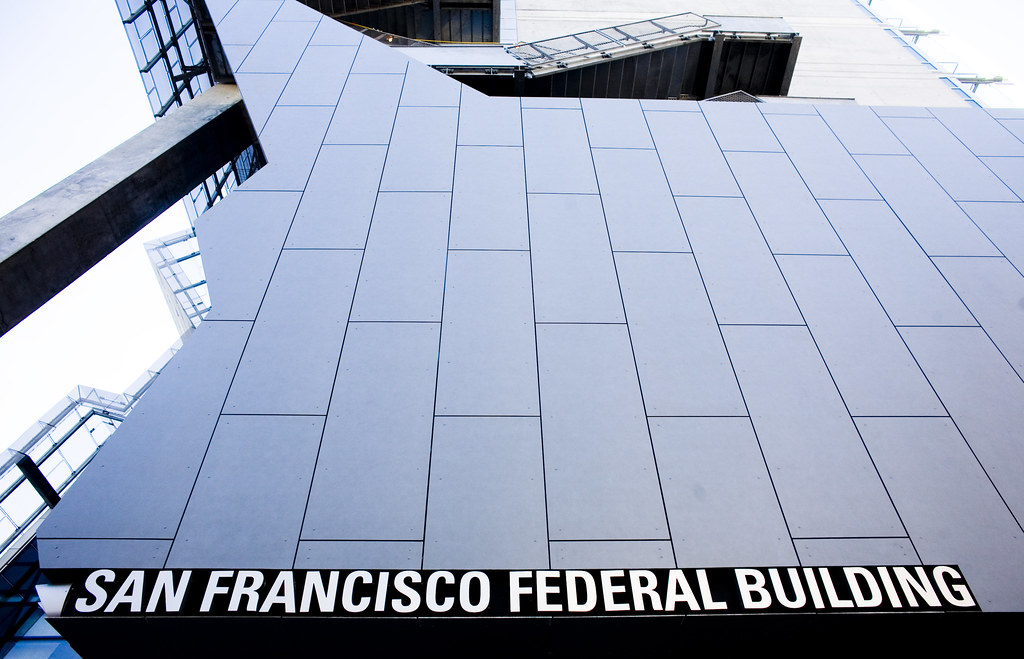
Photo above of the San Francisco Federal Building from my San Francisco Federal Building set.
Hey Walt Disney Company, Photography Is Not a Crime
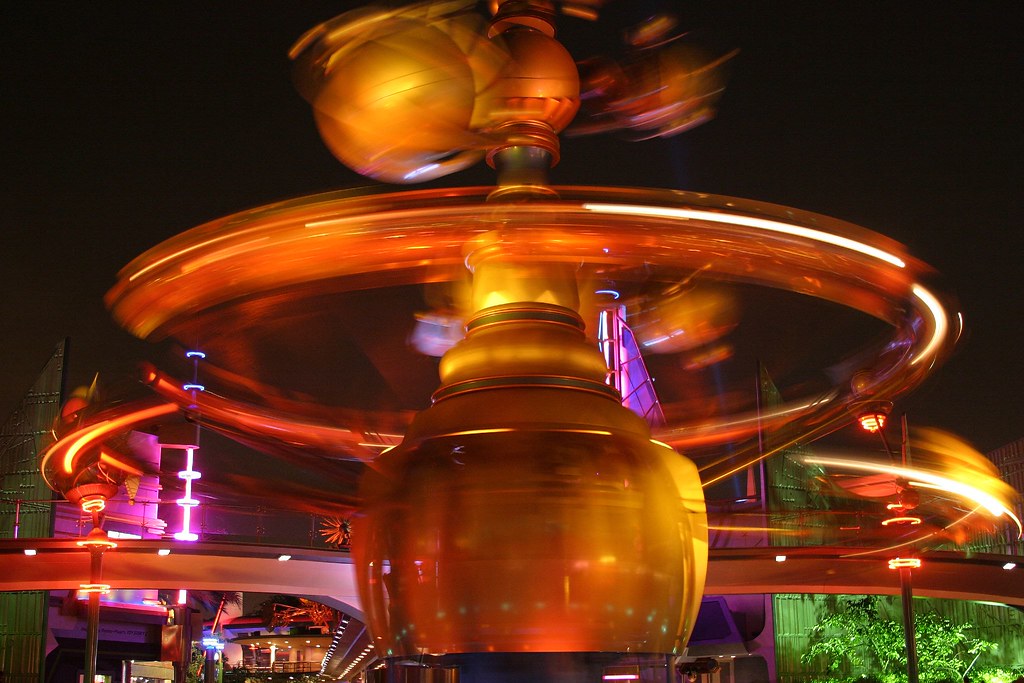
I have to say that all of my own interactions with the Disney company have been enormously positive. I’ve shot both Disneyland and Downtown Disney in Anaheim and never had any trouble myself. When I shot Disneyland a few years back, I set up my tripod and shot several long exposure shots of the rides and was never hassled once. One time a Disney employee came up to me to ask me about my photography, but he was super pleasant and only was curious personally as to how I was making my photos. All in all I have a high regard from my own experiences of shooting on Disney property and their Magical Kingdom.
Disney does in fact allow personal photography on their various properties and goes so far as to even allow folding tripods that can fit inside a backpack (what I used when I shot at both Disneyland and Downtown Disney in Anaheim).
The Walt Disney Family Museum in San Francisco doesn’t allow photography, which kind of sucks, but the entertainment properties personally have always been pleasant for me. Of course *everyone* typically takes photos at Disneyland and Disneyworld and there are millions of photos online.
So I was very disappointed to learn today from photographer William Beem that he had a terrible experience recently while shooting Downtown Disney at Disney World in Florida. Based on his report, I’d say that Beem was treated very unfairly in light of Disney’s open photo policy and I hope that Disney issues him an apology and offers him a free pass or something to their parks.
In a post entitled, “Disney Thinks Photographers are Terrorists,” Beem chronicles in detail his frustration with Disney security officials after being confronted by them repeatedly and having them threaten to call the Sheriff’s Department on him for not providing them identification.
From Beem:
“At this point, I let Don know that I’m not comfortable providing him with more detailed information about me. He’s never told me where that information will be recorded. He’s all but directly accused me of being a terrorist and, quite frankly, I don’t see how handing him my driver’s license is going to thwart the terrorist attack he’s generated in his mind. I told Don, twice during our conversation, that I’ll be happy to leave the property if he feels I’m some sort of threat. Don tells me that if I don’t provide him with more identification that he’s going to call the Orange County Sheriff’s Office.
It’s frustrating to deal with this kind of mentality. Photography is not a crime, even on private property. At best, all a security guard can do is ask you to leave the property. They have no right to tell you that you can’t take photographs, confiscate your camera or other property, or even lay a hand on you. Fortunately, Don didn’t try anything physical at all. However, his demeanor definitely changed once I declined to give him my license. His approach changed from the friendly, but concerned security manager into one of threats and intimidation. While he repeatedly told me that he was going to call for a deputy if I didn’t provide my ID, I couldn’t help but wonder exactly what crime he was going to report to the deputies.
My plan for the evening was to shoot my photos and have dinner at House of Blues, but Don had definitely turned me away from wanting to give any business to Disney that night. I had also planned to renew my Annual Pass to take more HDR shots in the parks, but I can only imagine more intimidation and humiliation from Disney Security as a result. After roughly twenty minutes of dealing with Don, I told him that I was just going to leave. He was welcome to walk with me if he was concerned.
Don followed me, as did another uniformed guard, Eugene. During the walk out to my car, Don was on the phone calling in more guards and, I presume, the Sheriff’s office. By the time I arrived at my car, at least two more guards swiftly arrived on bicycles, a couple more had walked up, and there was a Disney Security car.
I took my time walking out. I took my time putting my gear away in the back of my car so he had plenty of time to let the deputy arrive, but I never saw one. While I packed up my gear, I asked Eugene if this happened often. He didn’t respond and seemed somewhat uncomfortable. I mentioned that he probably wasn’t allowed to say anything and he told me that he just preferred not to speak. That’s understandable, since his boss was right there. Eugene moved from Maryland to Orlando and started working at Disney eleven years ago. We talked a little about the weather and he mentioned that he liked the cold, but Disney was here. I can apprecate that Eugene wanted to work there. Maybe it’s still “magical” for him.
While I was packing up, I overheard Eugene on the phone. Although I don’t know who was on the other end of the call, I presume he was speaking to someone at the Sheriff’s office. Don said that he asked for my name and I was unresponsive. Well, that was a blatant lie and I told him it was untrue. I reminded him that I’d given him my full name, where I lived and even where I worked. Don seemed annoyed. It was bad enough that he lied about that (I understand that lying to the police is a crime), but then a few minutes later he told the same lie again. Clearly, this guy was working the phone to make me look like as bad as he possibly could. A few lies here or there were probably OK if it helps catch a terrorist; perhaps that’s how he rationalized it.
Once I closed the car I told them I was ready to leave, unless they planned to detain me against my will. Don said they wouldn’t do that and I was free to go. He then instructed the several security guards around me to take plenty of pictures and get everything. I found this somewhat ironic. I’m sure that I was captured on security video while on-site. Don’s guards likely took photos of me, my vehicle, my license plate and property. Then I drove off slowly and a Disney Security car followed me until I left the property.”
I hope that the Walt Disney Company looks into this poor behavior on the part of their security officers. Because hearing stories like this certainly make me seriously reconsider whether or not I want to support Disney properties in the future if I’m going to be treated like a criminal with my camera.
Vote for “Photography is Not a Crime” for Best Blog in the South Florida Sun-Sentinel Blog Contest
My Pal Carlos Miller runs what is probably the best blog in the world right now chronicling problems and issues that photographers have with legal photography, Photography is Not a Crime. Carlos regularly publishes stories about photographer harassment, arrest and other unfortunate situations in order to shed light on the important rights that we all ought to have to pursue our legal constitutionally protected right to photograph in public. He provides a valuable blog and service for all photographers.
Carlos is out of Miami and his blog is running right now in 2nd place for the South Florida Sun Sentinel newspaper’s best overall blog contest. It’s sort of a pain in the neck because you have to actually register with the Sun Sentinel in order to vote for his blog, but I did it and I hope you consider doing it to. If you care about photographer right’s his blog is doing a great service for all of us and it would be nice for him to get some recognition down in Florida from the mainstream press for it.
If you’d like to vote for his blog you can learn how to do that at this post here.
“Don’t Shoot the Mannequins,” Said the Dude From Prada
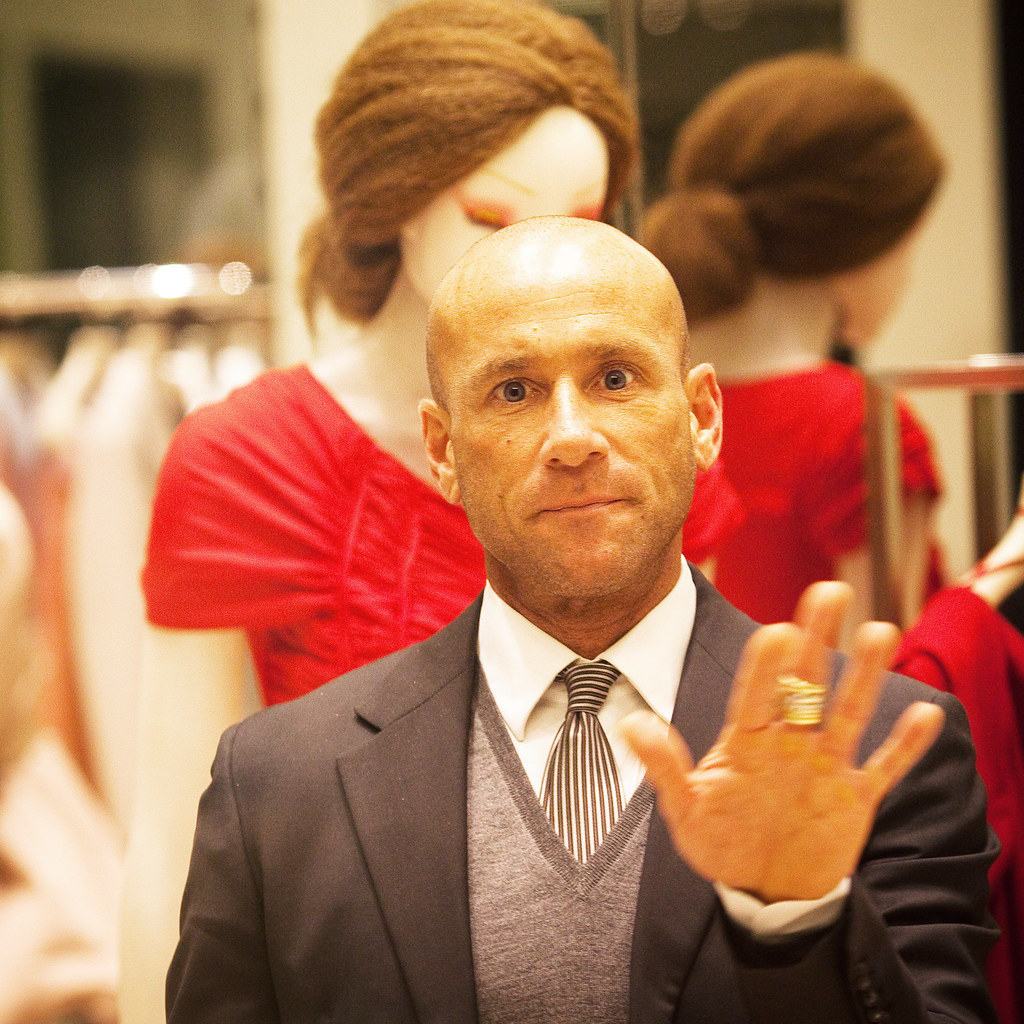
Dude from Prada thinks he owns the public sidewalk.
Starbucks Tries Social Media on Flickr, Fails, Locks Down All Discussion Threads to Silence Their Critics
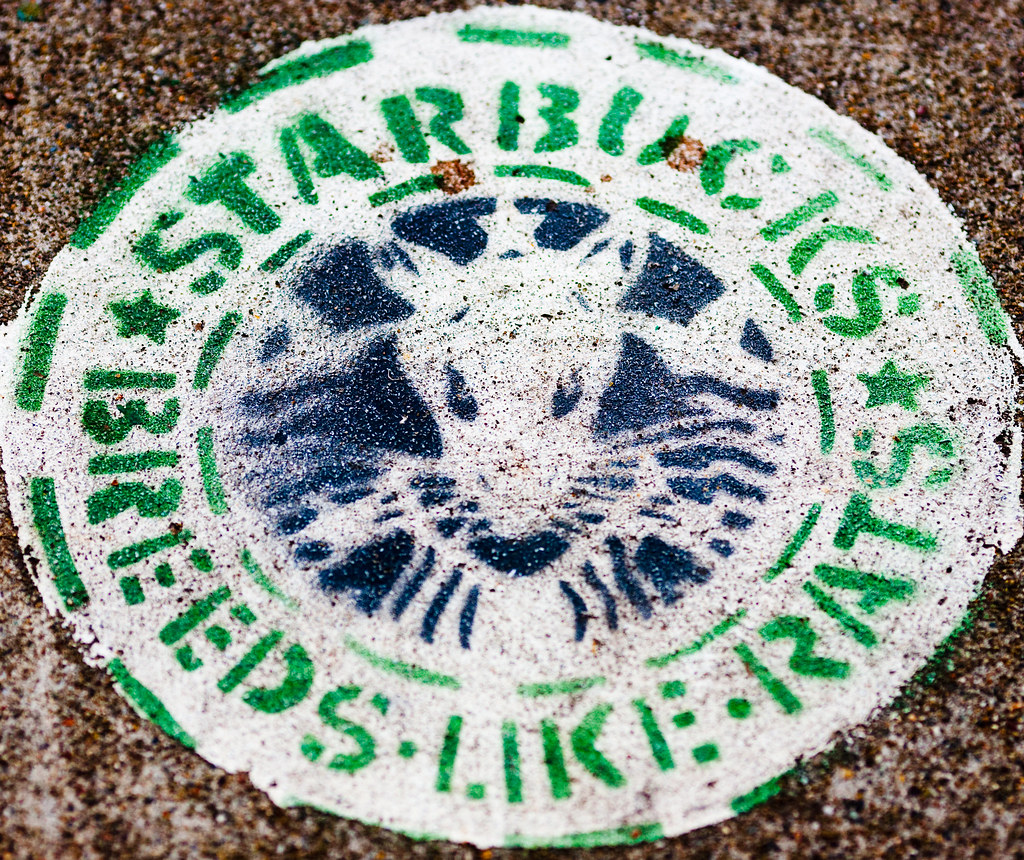
I was troubled today to see Starbucks take the draconian step of locking down 100% of their group threads in the Official Starbuck’s group on Flickr. All threads were locked today and a note was added to their Flickr Group reading:
“This group has helped inform us of the inconsistent experiences photographers have in our stores. We have put group discussion on hold until we have more updates on an official policy for photography in our stores. We appreciate your patience and encourage you to check back in the following months for an update.”
Censorship is never good and for a corporation to open a dialogue with their customers and then shut it down due to criticism is pretty much directly in contrast to the transparency that social media ought to be about.
In December I blogged about the difficulty that Starbuck’s was having articulating a reasonable photo policy in their Flickr group where they have been being attacked by photographers over the course of the past months. Many photographers on Flickr felt it was somewhat hypocritical of Starbucks to encourage photographers to post photos representing their “Starbuck’s experience” when so many photographers were regularly being told that they are not allowed to photograph in Starbuck’s stores.
The question about whether or not photography is or is not allowed in Starbucks stores still seems very much in the air, and from the request that photographers now check back with the group in the “months” ahead (after having this issue linger since September of last year) it doesn’t sound like they will be resolving this question anytime soon. Taking over six months to respond to photographers on this issue is a huge Starbucks FAIL. And now locking their threads to avoid continued criticism for what will likely be many more months, well, it’s obvious that Starbucks does not get social media and an even bigger FAIL.
Starbucks should apologize to the photographers who have invested many hours in this group of theirs and reopen threads. They should make it a priority to establish a reasonable photo policy and have it communicated to their stores ASAP. Of course their timing for shutting down their group threads, late on a Friday afternoon where it hopefully will get lost over the weekend on the web is also pretty obvious and weak.
There is an unlocked thread on another non-official Starbucks group about this issue here.