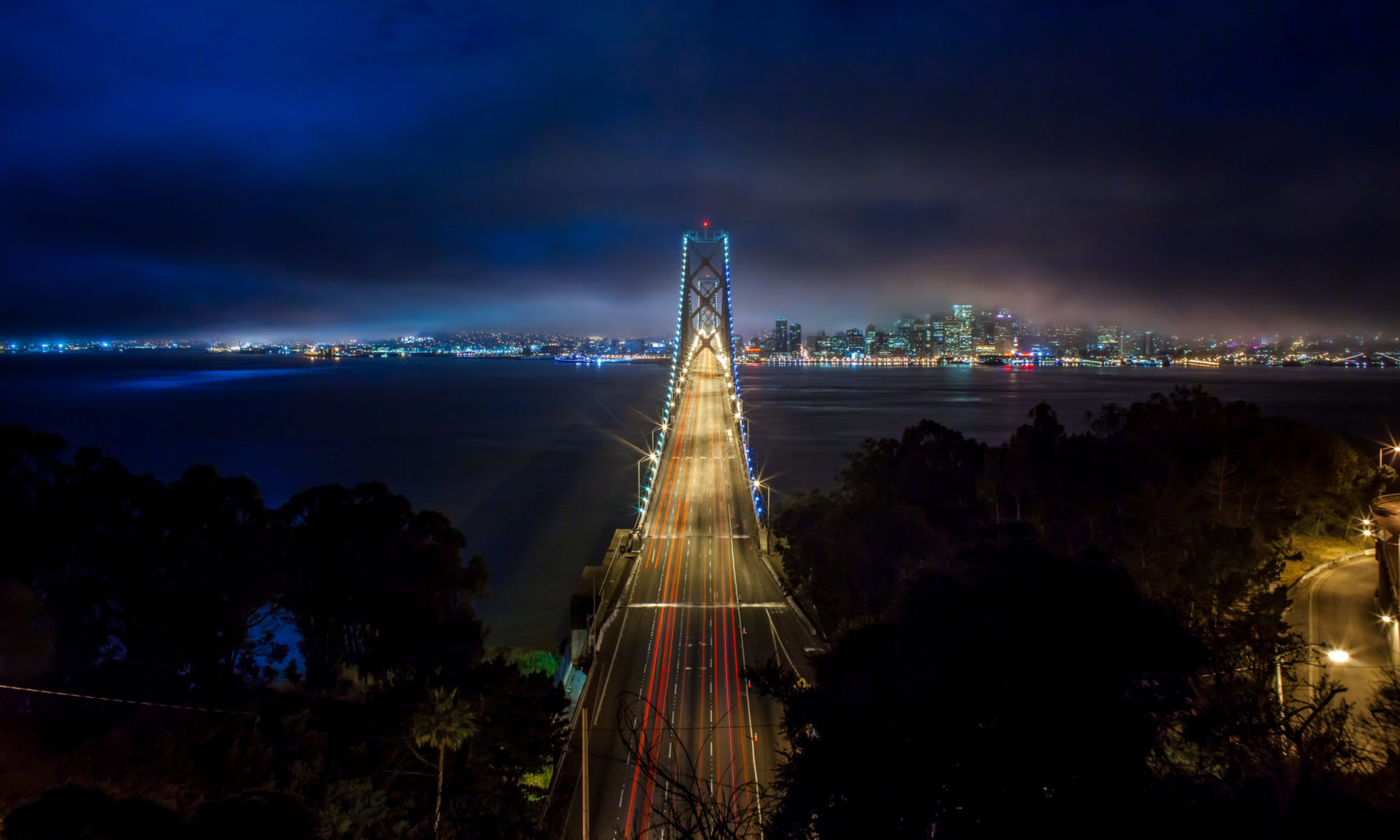

San Francisco Skyline
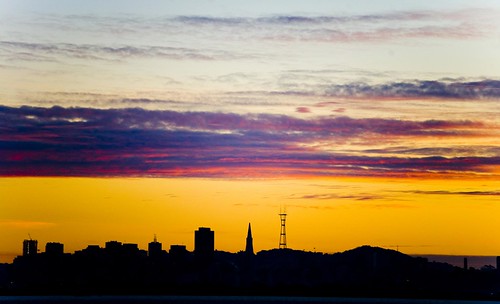
74 Things Merkley Learned About Being Mentioned in the New York Times
“74. “The New York Times” dropped into various conversations with any human, dog or reflective surface who will listen along with “yeah they mentioned me in this ginormous article about radness…” makes you sound like a dick.”
You’ll have to check the list to read the rest of them.
This man is the king of sarcasm!
FriendFeed Adds Flickr Favorites to Your Feed

I just spotted a fantastic enhancement to FriendFeed via Raoul Pop. Raoul requested that FriendFeed include the photos that you fave on Flickr along with the photos that you upload yourself and it looks like FriendFeed has added this functionality. This is going to make FriendFeed a much more visually beautiful place.
I fave a *ton* of photos on Flickr so it will be interesting how this shows up in my FriendFeed.
One of the main reasons that I fave as many photos as I do on Flickr is that I use the program Slickr to download high res copies of my faves and then use them for slide shows that I watch on my XBox 360 Media Center extenders throughout my house with music.
In order to activate your faves in your FriendFeed just delete your current Flickr feed in FriendFeed and re-add your Flickr account.
FriendFeed is a much smarter way to view your friends/contacts photos on Flickr because it doesn’t limit you to the last 1 or 5 photos from your friends/contacts. Instead it shows the last 7 photos that they uploaded with a little icon next to the thumbnails to let you know that there are even more if you want to click it and have all uploaded thumbnails show up.
I’ve long been frustrated when I miss photos from my friends who upload more than 5 photos at a time because they get buried on Flickr’s most recent photos from your friends/contacts page.
It’s going to be interesting watching FriendFeed import more and more of the functionality that I use Flickr for in much better ways than Flickr does. Already I’ve found that I rarely go to my contacts most recent photos on Flickr anymore and instead choose to browse these photos directly from FriendFeed.
FriendFeed has already pretty much replaced 100% of my Twitter usage. It will be interesting to see how much of my Flickr usage it ends up consuming as well.
If you are a contact of mine on Flickr please drop me a comment with your FriendFeed account so that I can continue to see your photographs there. If you haven’t signed up for a FriendFeed account yet, go for it. It’s super easy and allows you to share all of your Flickr photos along with your blog posts, Twitters, and other interesting stuff that you want to share.
If you’d like to add me as a Friend on FriendFeed you can do this here.
One enhancement that I’d still like to see FriendFeed make is the ability to segregate someone’s Flickr favorites from their Flickr uploads. It would be helpful if they allowed me to choose to follow someone’s uploads but not their favorites and vice versa. That’s one of the most powerful things about FriendFeed, the ability to hide certain content and filter the content that you want to consume.
Update: Bret Taylor responds via Twitter and says that you won’t need to delete and re-add your Flickr account to get this functionality after noon today.
“Hey, no fair announcing before we do 😉 You don’t need to re-add unless you want it immediately; they will start showing up for everyone around noon today.”
What Are Your Favorite Photography Related Films?
I just saw War Photographer, the documentary based on James Nachtwey’s important photography, over the weekend. It’s a riveting documentary that takes you behind the lens of one of America’s greatest war photographers. While much of the movie details Nachtwey’s amazing reportage with war, much of it also deals with many other places in the world that he has photographed and reported on. Famine in Africa, poverty in Indonesia, and other important topics are examined from a photographer’s perspective.
A very worthwhile film if you have not seen it yet.
I’ve put my own list of favorite photography films here. I tried to put these movies in order based on how great a film I thought it was.
1. War Photographer. Certainly one of the best documentaries on a photographer that I’ve ever seen. Update: Be sure to check out James Nachtway’s talk at TED here (Thanks, Sam!).
2. American Masters: Andy Warhol. A tremendously well done PBS documentary on the life of Andy Warhol.
3. American Photography, A Century of Images: A terrific documentary examination of the most important moments in American photography. I reviewed this documentary here.
4. The Genius of Photography. Unfortunately this BBC series is not available on Netflix yet, but is an amazing multi episode series. I watched it a while back when it was on the Ovation Network.
5. W. Eugene Smith, Photography Made Difficult: An excellent biopic on one of the most dedicated photographers that the world has ever know.
6. Fur: An imaginary portrait of Diane Arbus. Although not necessarily entirely historically accurate, an interesting examination nonetheless of Diane Arbus and the interesting subjects she photographed. Nicole Kidman plays Diane Arbus.
In addition to the above movies that I’ve seen, I have a bunch of other photography related movies in my current Netflix queue that I hope to watch in the coming weeks:
Photographer
The Adventure of Photography: 150 Years of the Photographic Image
Through the Lens: The Dream American Tour
National Geographic: Through the Lens
Diana: Life Through a Lens
Masters of Photography: Diane Arbus
Masters of Photography: Andre Kertesz
Ansel Adams: American Experience
Masters of Photography: Edward Steichen
Superstar: The Life and Times of Andy Warhol
Naked States
Andy Warhol, The Complete Picture
Alfred Stieglitz: The Eloquent Eye
Born Into Brothels
Chuck Close: A Portrait in Progress
Annie Leibovitz
Richard Avedon: Darkness and Light
The True Meaning of Pictures: Shelby Lee Adams’ Appalachia
Contacts
Standard Operating Procedure
Henri Cartier-Bresson: The Impassioned Eye
Related post: Luminous Landscape’s Ten Movies Every Photographer Should See.
Do you have other photography related films that you’ve enjoyed? Feel free to drop a note in the comments. If you’d like to add me as a contact on Netflix you can do this here.
Leilani and Dale Neumann May Be Headed for Prison
ABC News: Homicide Charges for Parents Who Prayed as Daughter Died
A few weeks ago I blogged about the case of Dale and Leilani Neumann who prayed for their 11-year-old daughter Madeline rather than give her medical attention that she needed. Madeline died from diabetic ketoacidosis. According to Fox News she probably suffered from “nausea, vomiting, excessive thirst, loss of appetite and weakness,” for a 30-day period before she died.
Well it looks like the Marathon County District attorney in this case is doing the right thing and has charged Madeline’s parents with second-degree reckless homicide. They face up to 25 years in prison if convicted.
I think that it is important that they are convicted and hope that this case serves as an example to other parents that there is a legal and moral obligation to seek medical attention for a sick child.
More from the article on Madeline:
“Madeline, a straight-A student who was being home-schooled, was in good health until she started getting tired about two weeks before she died, her mother has said. When the situation got worse over Easter weekend, “we stayed fast in prayer then,” Leilani Neumann said. “We believed that she would recover.”
According to a search warrant request, the girl’s grandmother told investigators she had been ill for several days, was “very tired,” and wanted to be held by her mother. By March 22, Madeline couldn’t walk or talk, her grandmother said.
The grandmother said she told Leilani Neumann to take the girl to the doctor but the mother said her daughter “would be fine and God would heal her,” the court record said. “
Can Google Solve the Image Search Problem?
A Google Prototype for a Precision Image Search – New York Times
The New York Times is out with a piece today on the latest paper put out by Google on image search. The paper was presented at the International World Wide Web Conference last week in Beijing and purports to use something called “VisualRank,” a computer algorithm, to combine image-recognition software with rank and weighting.
According to the Times, Google has a team of “150 Google employees” working on a new scoring system of image relevance. Google claims that this “team” returned 83 percent less irrelevant images in a sample group of 2000 popular product inquiry search terms.
Last year Robert Scoble and I had the opportunity to meet with Marc Levoy, a photography researcher down at Stanford, who said that he was working on image search with Google. I tried to get Marc to elaborate on what Google was working on or how they were approaching image search but he kept his cards close to his chest and would not elaborate specifically. I’m assuming that some of the work that Marc was doing may have to do with this project.
Although Google has never been exactly clear on what they are doing with image search, it is something that I’ve been watching over the years.
Previous to this paper, the most significant insight we had on what Google was up to had to do with their “Image Labeler game.” With Image Labeler Google allows people to compete against each other to label certain images on Google for time. One person wins and one person loses. I’ve played the Image Labeler game before and have been critical of it. It’s about as much fun as watching paint dry.
I’m not sure how successful this game has been for Google, but I doubt that it’s significantly enhanced their image search. And so now Google returns to the ever elusive artificial intelligence angle. Google has always hated having to rely on actual humans vs. algorithms to rank and rate images so this comes as no surprise to me.
Remember a few years back when there was a big rumor out that Google was going to acquire Riya? Riya claimed to have technology that could effectively recognize faces in your photographs and auto tag people in photos based on this facial recognition software.
I tried Riya’s technology shortly after they launched it. Uploaded thousands of photos to their site, spent hours training their software on faces and in the end their results were abysmal. Despite tons of dough being dropped on Riya by some pretty naive VCs, their software quite simply did not work.
I’d heard rumors that some of Riya’s work wasn’t even computer algorithm. That they were having people in India actually physically go through the photos to try and correctly label them. Apparently people in India had a hard time telling one white person from another. These are just rumors.
In any event Google never acquired Riya, which instead has now morphed into a shopping search engine called like.com and will likely be dead soon enough.
Personally, and despite the hype that you hear from time to time from the likes of Google and Riya, I seriously doubt that you will see image recognition software good enough to effectively enhance image search anytime soon.
Tagcow came out about a month ago offering a similar mysterious service that would categorize your images with tags. They didn’t say *how* they tagged your photos, but TechCrunch later reported exactly how they were doing it. They were paying people $1.20 per hour with Amazon’s Mechanical Turk to have humans do this work.
The problem with image search for a company like Google is that there is no business justification for spending $1.20 per hour to have someone tag or rank images. Google doesn’t even put advertisements on their image search pages and I’d bet that ads are highly ineffective here.
Google does image search because they have to. It’s a me too sort of thing more than anything and I can’t see them spending money on humans to do the work as it would run contrary to their entire philosophy of leveraging a computer to do a human’s work. I was in fact surprised even when I first heard about the Image Labeler game — but Image Labeler relies on free, volunteered labor. Free, volunteered labor by who? I have no idea. I simply cannot imagine *anyone* being bored enough on the internet to want to tag images for free for Google.
The king of image search today of course is Flickr. Yahoo smartly realized early on that as valuable as Flickr was as a fun photosharing playground for people, it also had an ancillary benefit (in fact maybe even a primary reason — remember folks, the search team at Yahoo bought Flickr at Yahoo not the photo team) of providing kick ass image search.
Like Image Labeler, Yahoo relies on free labor for their organization and rank of photos as well. Except, in Flickr’s case it actually *is* fun. It’s part of the Flickr experience and when users tag their photos for their own purposes and for search purposes and then other users fave, comment, view (read image rank) these images, you tend to get superior image search results.
This will likely benefit Microsoft most of all — assuming a Microsoft takeover takes place at some point.
Skies of Painfulness and Dread

Why Sharing is Great
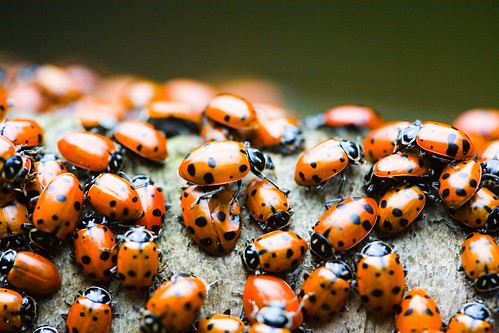
So many people out there are so proprietary with their art and their photography. All of my photos on Flickr are Creative Commons licensed — non commercial. They can all be used by people for personal use and by non-profits.
Frequently I get people asking me for permission to use my photography. Usually, even when it’s commercial use I say yes. If it’s a well funded commercial entity sometimes I’ll ask for money for use. Of course with my CC license people don’t even have to ask me to use my stuff for personal use but so many do anyways.
The photo sharing moments that I find most fulfilling are not the ones when a big magazine or web site wants to use my work. The photo sharing moments that I find most fulfilling are the ones when every day people use my work in even more important ways.
I got an email yesterday from Laura Lea on Flickr asking if she could use one of my ladybug photos for a classroom art assignment. She didn’t need to ask me permission of course as this use would fall under the CC license. Even if my work was all rights reserved she still wouldn’t have needed to ask me because this sort of use would certainly fall under fair use. I told her yes of course and to keep up the good work and she sent me back this note this morning:
“Your photo looks so sharp and wonderful in my powerpoint! I’m very glad that you so generously let me use it! I have you footnoted below the slide! May your generosity be given back doubly! I’m now out of a big deadline dilemma. I’m hoping for two more generous people to help me and I’ll have something that my students can use for drawing from and writing in their ladybug research books. I can see my artists now, little six and seven year olds huddled and trying to draw the ladybugs hibernating! I have a few really great artists.”
And what a touching note that is. Especially to someone who has a 7 year old in first grade right now myself.
All the time people send me emails about things like watermarking and protecting their images. They ask for advice on how to keep people from “stealing” their photography. They get bent out of shape when someone uses a photo here or there on the internet.
I don’t worry about these things so much. I find focusing on the positive with my photography more rewarding for me personally than focusing on the negative. And this week I get to think about a bunch of six and seven year olds looking up at a photo of my ladybugs and trying to draw the photo for their ladybug research books. That’s pretty awesome!
Scobleizer on Our Two Days With Ansel Adams’ Son Michael Adams

Kodak Moment: Following Ansel Adams footsteps ? Scobleizer — Tech geek blogger
Robert Scoble has a great write up on our Thurs/Fri trip that we just got back from up in Yosemite visiting with Michael Adams, Ansel Adams’ son. Robert’s also got some of his photos up in his Flickrstream from our trip. I think my favorite is one of me that Scoble took with my 14mm ultra wide angle lens. Scoble literally had half his body out of the car to get that shot and I kept worrying he was going to fall out of the car entirely. Anything to get the shot.
I published one photograph the other day as an Ode to Ansel Adams on Flickr — but will probably end up with about 150 in total from the trip. I started my editing process earlier this morning but still have quite a bit of work to do. Watch my Flickr and Zooomr streams over the course of the next week and you’ll probably see a lot more.
I’m going to do a much more detailed write up on my own thoughts on our time with Michael Adams and his father’s legendary photography in the next few days. I’m still formulating a lot of my thoughts about the trip but suffice it to say that it was an amazing treat.
Getting to go to the famous spots in Yosemite where Ansel made his photographs and listen to his son annotate about the locations was one of those once in a lifetime experiences.
Robert has already published a bunch of the ad hoc video that we did on the trip broadcasting live on Qik. Interestingly enough the cell phone reception almost 8,000 feet up in the sky at the top of Glacier Point was fantastic. Robert said that when we broadcast live on the internet from atop Glacier Point that this was the first time in history that this had been done. I’m still scratching my head on why my AT&T; iPhone reception was far, far, better atop Glacier Point than it is in downtown San Francisco.
There will be a much more professional and polished video of the trip coming up in the next few weeks for a new photography video show that we are working on called PhotoCycle.
Speaking of PhotoCycle, it’s going to be an exciting new photography video series. It’s going to include interviews with famous people in photography, tips and tricks on how to get your own photography even better, episodes about the business side of photography and lots of exciting new photowalking episodes where we take you to new and exciting places with photographers to discuss this thing that so much of us love.
Marc Silber, a professional photographer who went to art school with Annie Liebovitz is going to host the show. Rocky Barbanica is the executive producer. We are still looking for a corporate sponsor for the show so if you know a company who might have an interest in a show like this drop Robert, Marc or I a line. It would be a great way for the right company to get a ton of exposure with photographers all over the world.
You’ll hear a lot more from me about our visit with Michael Adams over the course of the next few days. There were so many highlights. Getting to go up to Glacier Point (which is closed off to the general public right now) for a private taping session, dinner with Michael in the historic Ahwahnee Hotel dining room, getting Michael’s views on what his father would have thought about today’s new digital photography, and so much more.
The photo above, by the way, is of my wife who not only was my model but did a great job making sure we were all well fed and organized.
Coincidently, the NY Times also is running a front page article on Ansel and his photography.