Prismatic Launches iOS Version 2.0
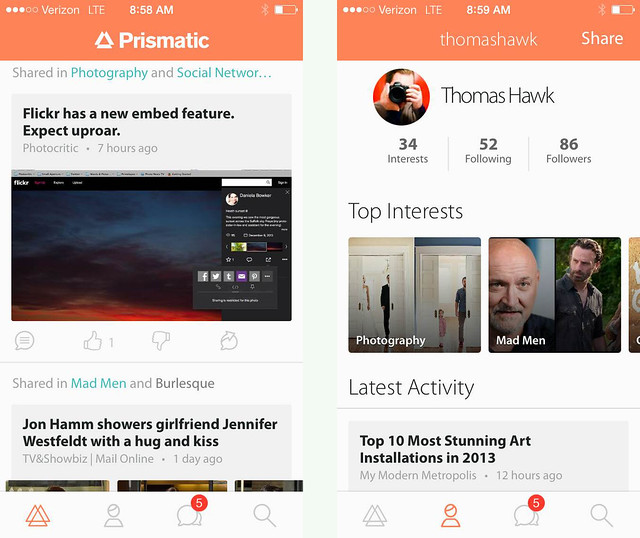
Prismatic 2.0 for iOS released this morning.
I’ve been a big fan of the news aggregator Prismatic ever since it originally launched on the web. As far as I’m concerned, there is no better site on the internet today for aggregating all of the news stories that *I* care about than Prismatic. It’s the ultimate personalized news feed.
On Prismatic, I enter my interests (subjects, topics, companies, people, TV shows, etc.) and Prismatic offers me up a daily feed of pretty accurate stories that I will be interested in. Prismatic has completely replaced my old RSS reader for me and is my go to place each day to view my favorite stories, personally tailored to my interests. The design is fast and elegant and easy to use. Prismatic currently indexes 5 million new stories every day and contains over 10,000 interests you can follow.
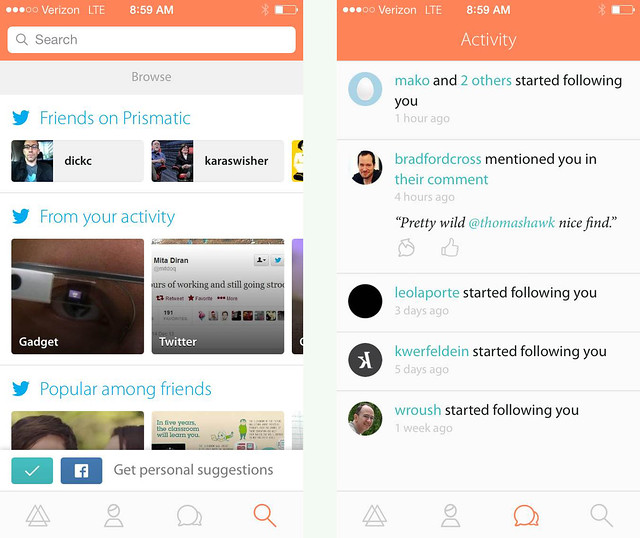
On Prismatic I can like or dislike stories and Prismatic uses a machine learning algorithm to tailor my future posts even more to my interests.
With the new iOS version Prismatic gets even more social than it’s been in the past. I can follow people and things that my friends like are included in the algorithm for what I’m presented.
While I spend a lot of time working on my photos or spending time on social networks when I’m on my computer, Prismatic is the perfect companion to my iPhone, where I want to quickly find great articles that interest me while I’m on my commute or walking around mobile. You can easily share stories you find and like directly from Prismatic to Twitter or Facebook.
Congrats to Bradford Cross and his team at Prismatic on today’s launch. Go get the new Prismatic for iOS in the APP store and check it out. I think you’ll be impressed by how many great stories are personalized to you — especially great photography stories. 🙂
Testing New Flickr Web Embeds Feature
New Flickr format for blogged photos
http://blog.flickr.net/2013/12/18/flickr-web-embeds
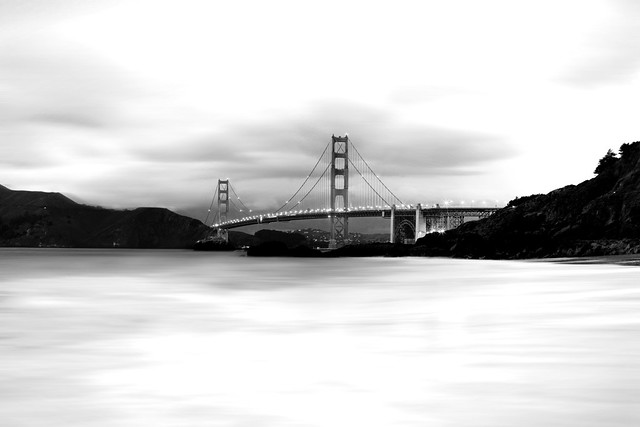
Old Flickr format for blogged photos
I like the old format a lot better. The new format forces a title and Flickr logo watermark on your photo. I do love Flickr but I don’t want a Flickr watermark on every single photo I blog. I don’t want *ANY* watermark on the photos that I blog.
Also, look how bad the watermark looks on a white background. White text on a white photo becomes unreadable. Also, why is the r in Flickr cut off on the right on the flickr logo with the new iframe crap code?
As it stands right now, users on Flickr have an option to use the new embed feature or they can also still get the old html code. On the new Flickr beta photo page though users are only given the option of the new iframe code. I hope when the new beta photo page becomes default, we still have an option to choose between the old, clean and simple code instead of the new forced watermark code.
More conversation on today’s change in the Flickr help forum here.
Update: More from TechCrunch here:
“But perhaps a logo with more transparency would be nice, or one that faded away with navigation controls, appearing on interaction or mouse-over. It’s a fairly minor complaint for me, though some photogs might have an issue with it.”
Yep, I’m one of those photogs that probably has an “issue” with a forced Flickr watermark on every single photo on blog on my paid Flickr Pro account that is supposed to exempt me from advertising on my photos.
Update: Thanks to tregoning at Flickr who gave me the conversion dimensions to make the new Flickr embed code fit my blog: height=”384″ width=”576″
Update: Flickr changed the new embed code to only show the title/Flickr logo for the first few seconds and then only on hover after that. MUCH better. 🙂
Why Blocking is Important for a Social Network
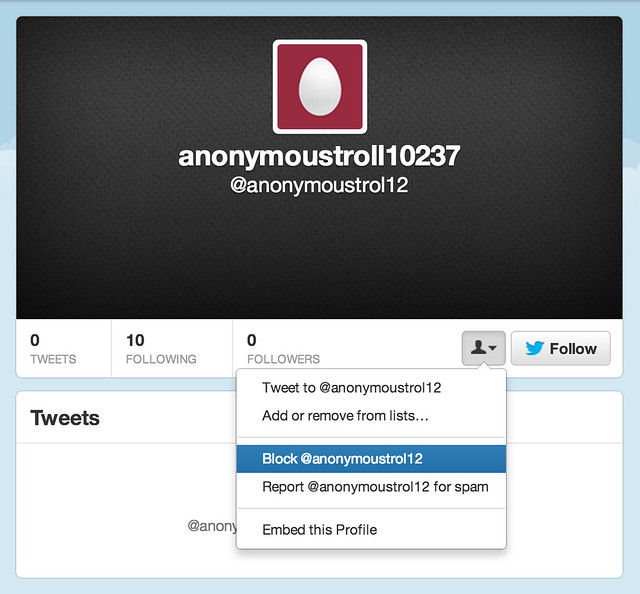
Earlier today Twitter reversed their decision to change how user blocks are handled after a backlash reaction on their network.
From the Twitter blog:
“Earlier today, we made a change to the way the “block” function of Twitter works. We have decided to revert the change after receiving feedback from many users – we never want to introduce features at the cost of users feeling less safe. Any blocks you had previously instituted are still in effect.”
In a way, the current block at Twitter is sort of ineffective. If I block someone, the only thing it really does is prevent them from seeing my tweets when they are logged in (which also serves as notification to them that I’ve blocked them). They can still open up an unlogged-in version of Twitter (as easy as cmd-shift-N in Chrome, or cmd-shift-P in Firefox) and see everything I’ve tweeted publicly. Still, Twitter’s reversal shows that users really do care about blocking functionality and want more control and powerful blocking tools, not less.
I would argue that there are three key benefits that come from strong blocking tools on a social network.
1. Users feel empowered when they are more forcefully able to deal with harassment on a network. If someone is saying something offensive, why shouldn’t I personally be able to take control over that situation? If someone is making me uncomfortable, why shouldn’t I be empowered to deal with that for my own personal experience?
2. More effective blocking tools encourage more civil interaction. The thing that most trolls, haters, griefers, offensive jerks, etc. want on a social network is attention. By making it super easy to mute them or diminish them (especially by an intended target) it provides a disincentive for anti-social behavior in general.
3. Empowering users with blocking tools provides immediate relief for a user. Since oftentimes harassment is happening in real time, this can be more effective than waiting for customer service / community management reps at a social network to respond to reports of community violations. It is frustrating for a user to have to suffer even an additional 12 hours of harassment while a complaint works its way through to a community manager.
As far as best practices go, I’d hold up Google+ and Facebook as the networks that provide users the best blocking protection on the internet today.
Like Twitter, on Google+ and Facebook when you block someone they cannot see your public posts.
Google+ and Facebook take it one important step further though. Not only do they prevent someone you’ve blocked from seeing your public posts, they *also* filter the blocked user entirely out of your G+ or Facebook experience.
On G+ and Facebook when you block someone they become completely invisible to you everywhere on the network. It’s like they no longer exist in your social utopia.
That second block function is even more important than the first.
Flickr by contrast has some of the weakest blocking tools on the internet. When you block someone on Flickr, all it does is prevent them from private messaging you or commenting/faving your photos. Because of Flickr’s weak blocking tools, I’ve seen many of the most active, social accounts on Flickr leave due to harassment. This is bad design.
What makes harassment even worse on Flickr, is that (unlike G+ and Facebook) they allow anonymous troll accounts. So if a Troll1022 is harassing you anonymously on Flickr, and you report them, and three days later that account is deleted, all they need to do is set up Troll1023 and continue with the practice. Flickr’s weak blocking function allows virtually unlimited harassment on their network by anonymous trolls.
Protecting users and providing more control over your experience on a social network is important. It’s your most social and active users who will most likely sooner or latter run into friction. These are the users that any social network should be striving to empower.
I’m glad Twitter reversed their block policy after user reaction, and hope all networks realize how important the block feature is.
Why I Don’t Support “Black Day” at Flickr

If you notice something different about photos on Flickr today, it might just be “black day.” Over the past week or so, hundreds (maybe thousands) of users who dislike an impending photo page change (and in many cases, redesign changes from earlier this year) have organized and are protesting by posting black protest images to their Flickr accounts today, December 8th.
Here is why I don’t support this protest.
Flickr users have protested quite literally *everything* that has ever been changed to the site. Every change over the past decade or so that Flickr has been around, has been meet by strong resistance. When Flickr added video, when Flickr required Yahoo accounts to sign in, and certainly design changes most of all, all of these and so many more have been met with various protest movements.
The “who moved my cheese” crowd is strong with Flickr.
At the same time, in order to improve and grow Flickr *MUST* change. Flickr must evolve. Flickr must improve.
Whether or not Flickr gets their design changes right or wrong, they simply must move forward and compete with other photo sharing sites today. Hopefully they get it more right than wrong, but I simply can’t support something that’s primary premise is based on not changing for the sake of, well, not changing. That is how things die. As good as Flickr is, it can always improve, and if the site is paralyzed by the “no change” crowd it cannot innovate and grow.
Competition in the photo sharing space is stronger than it ever has been. Flickr, Google+, Instagram, Twitter, Facebook, Pinterest, SmugMug, Behance, 500px and more are all competing for our photos and our attention. If Flickr is going to survive as a contender in this space, they must produce a more compelling experience than they have in the past.
Many of those currently protesting design changes on Flickr are loud, very loud — and some are some of the rudest, vulgar and offensive people I’ve ever come across online. They way they trashed Marissa Mayer and other Flickr employees’ *personal* photostreams after the last redesign was way over the line.
Even as a large protest group, however, this group most certainly does NOT represent the majority opinion on Flickr. Most (the silent majority) Flickr users couldn’t be bothered to get worked up about anything and quite simply don’t care enough about whatever happens at some photo sharing site to have much of an opinion one way or the other.
For this silent majority, the best tool Flickr has is data. The best thing that they can do is watch how the majority use the site and react to changes based on their online usage patterns and actions. I suspect that recent design changes on Flickr have contributed to more users, more views, and more engagement — despite what a small, but vocal, minority might want you to believe.
Only Flickr has access to this data, but I suspect that they are quite happy with usage results (even just going by my own anecdotal increase in activity that I’ve seen on the site as changes have been rolled out this year).
Now, as far as the new photo page redesign goes, mostly I like it. I say mostly, because even as I’ve used the page (it’s in an optional opt in or out beta form right now), I usually end up turning it off and going back to the old page. It simply is missing too much functionality that I rely on and need to use Flickr at present.
For example, I need to be able to click on the faves button and see who has faved my photo. That is important (and pretty basic) social information that I want access to. At present you cannot do this with the new photo page (but it is planned per Flickr’s feedback page). Assuming Flickr gets all of the basic functionality right in the final product though, I like the design better in general.
I also like the redesign changes that Flickr implemented earlier this year. I think that the justified layout combined with infinite scroll is the fastest, most efficient, way to consume photos on the internet today. Both Google and Facebook use infinite scroll. While some people have claimed that Flickr is slower for them, it is not for me. Images load very quickly on a modern laptop with a broadband internet connection. I also don’t have bandwidth caps on my primary internet connections.
Flickr has never been faster and I’ve been able to see more images on Flickr this year than any year previous due to these efficiency improvements.
I think Flickr needs to change even more in fact — mostly around social. There is still so much that could be improved on Flickr from a social standpoint.
The primary role of a social network should be as a social lubricant. Flickr should be obsessed with social, much more than it feels that they are. How can Flickr create even more social interaction? How can Flickr turn online social interaction into offline social interaction? How can Flickr make it easier and easier to favorite and comment on photos? How can Flickr show me more photos that I like (and will interact with socially) and less photos that I do not like?
These are the questions Flickr should be asking as they innovate and improve, and, yes, change.
Why does Explore still exist as it does? It’s so broken. Why are power users blacklisted from Explore? Shouldn’t Flickr care about their power users?
Explore is boring to me because it is not customized to me. Flickr has so much data about me. Why aren’t they analyzing my data to provide me a better photo exploration tool? Flickr knows whose photos I favorite. Flickr knows what tags on photos I favorite (and with image recognition analysis in the future, even more).
Flickr knows the geolocational location of photos that I favorite. Why is Flickr wasting valuable Explore real estate by showing me photos with watermarks when I hate watermarks? Why is Flickr showing me images of overcooked HDR? Explore has so much potential to truly provide a compelling image discovery system and yet it still falls flat.
I hope more change is coming to Flickr, not less. 2013 was the most innovative year of Flickr since Yahoo purchased them. Hopefully 2014 will be every bit as good.
More comments on this at the original Flickr photo here and on Facebook here.